Earthquakes and Hurricanes – August 2011
Posted by Kathy Clark in Trips on August 25, 2011
Thursday, August 25, 2011
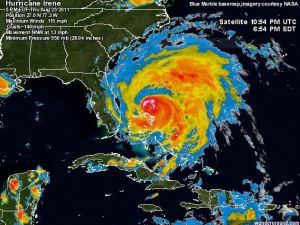
Watching Irene
Just two weeks ago we were anxious to depart Florida and get out of the “hurricane zone”! Tropical Storm Emily had fizzled out and we were pleased to make it to Virginia before any more tropical activity began. Generally, anything north of North Carolina is considered “safe” territory by our insurance company during hurricane season. So we breathed a big sigh of relief when we arrived safe and sound in Colonial Beach, VA. Imagine our surprise when we were hit with the largest earthquake in the known history of this area! Though not big by some standards, it measured 5.9 and was enough to cause near panic in the Washington, DC area! Shear Madness was at Colonial Beach Yacht Center where there was little impact and we were at our house in Oakton, VA where there was no major damage except for a few pictures being knocked off the walls.
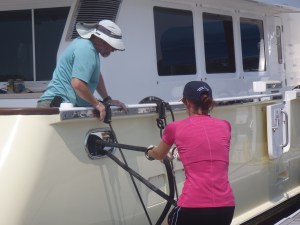
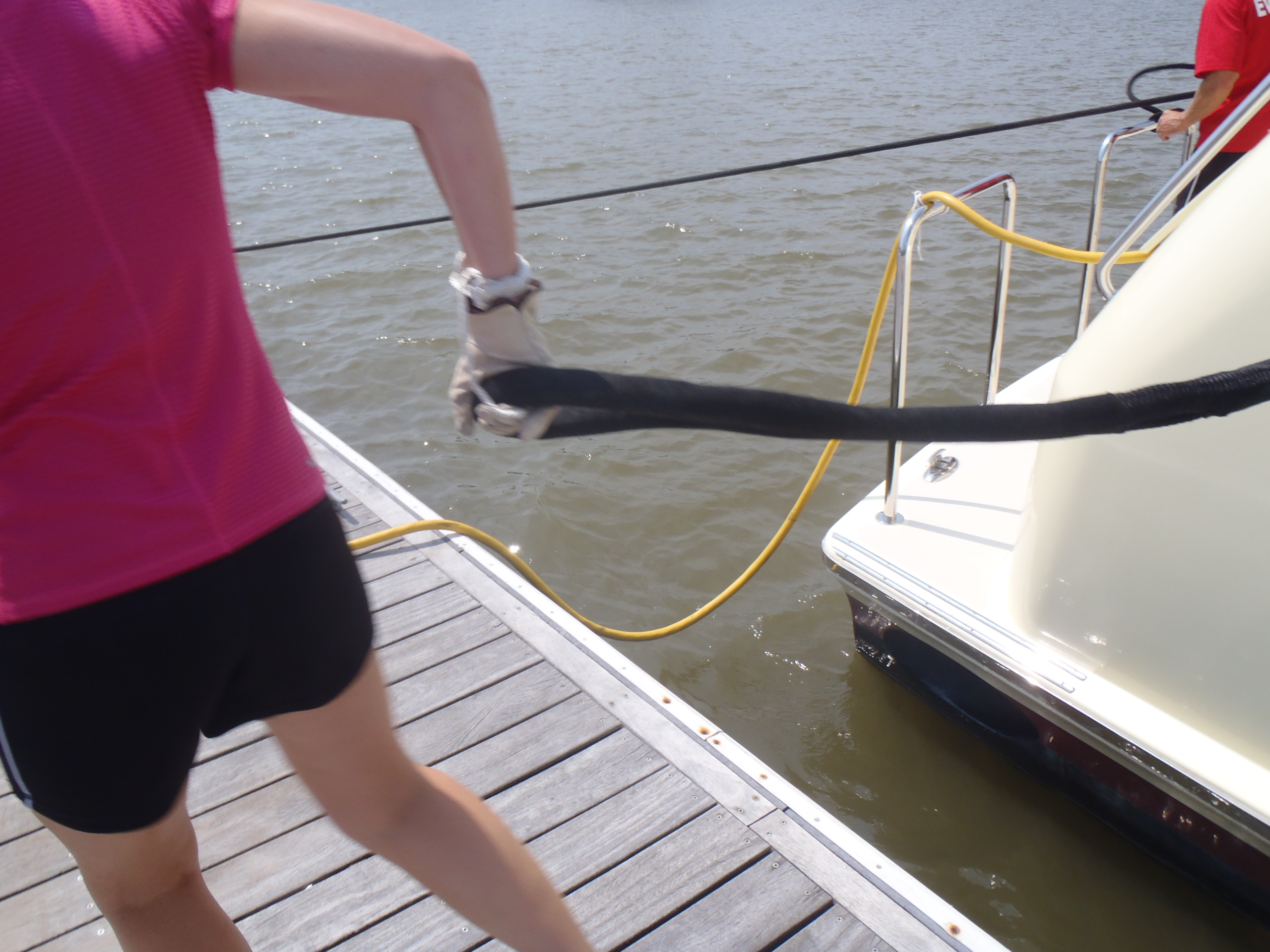
Bradley and Leanne add more docking lines
But the big concern now is Hurricane Irene! She has decided to skip Florida and head on up the east coast and will certainly cause an impact in NC, VA, MD, and further north. So here we are, making plans to weather a potential major hurricane! Not what we had expected, but another of the “adventures” of the cruising life. First is an assessment of the marina. We are in a good location, well up the Potomac River. We are on a sturdy “floating dock” at the marina – it is a relatively new dock with strong pilings and the dock moves up and down with the tide. This means you don’t have to adjust docking lines for major tide increases or storm surges. All good news. The pilings are also very substantial – with more than ten feet above the dock level, allowing for a huge increase in water depth without a major problem. We also looked at other options – places we could go and secure the boat at anchor and ride out the storm if necessary. While there are a couple possible spots, we ultimately decided that the marina offers good protection for all but the worst case scenario.
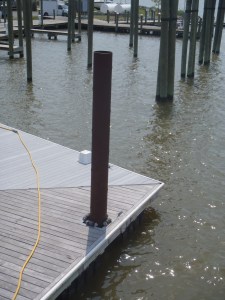
Nice long pilings on the floating dock
So our focus now is on readying the boat to withstand heavy winds and lots of rain. That means removal and stowage of anything that can blow away, tying down and securing anything that moves, and adding extra dock lines and fenders. We also looked around to see what other potential hazards exist – for example, other boats that may not be well secured or that have items that could be blown our way in high winds. There are a lot of people here making preparations to keep their boats safe. All that remains is to wait and see what Irene does. She’s scheduled to arrive in this area on Saturday night.We’ll report again once she’s gone!




North to Colonial Beach, VA (August 2011)
Posted by Kathy Clark in Trips on August 20, 2011
August 19, 2011
With our upgrades complete and the boat looking nice, we departed from Palm Beach just after noon on Friday, August 12 for the 800 mile trip north to Colonial Beach, VA. Our plan was to cruise straight through without stopping, which we estimated would take 4-5 days. The weather forecast was favorable and after a brief stop to clean the bottom of the boat, we were off! On a multi-day passage, we take turns standing watch as someone has to be monitoring all systems and keeping a lookout at all times. When the weather is nice, night watches on the flybridge with a full moon are truly spectacular! Fortunately for us, the weather was very cooperative, with clear skies, calm seas, and a bright moon most nights, punctuated only by an occasional thunderstorm. We could not have had better conditions for the trip!

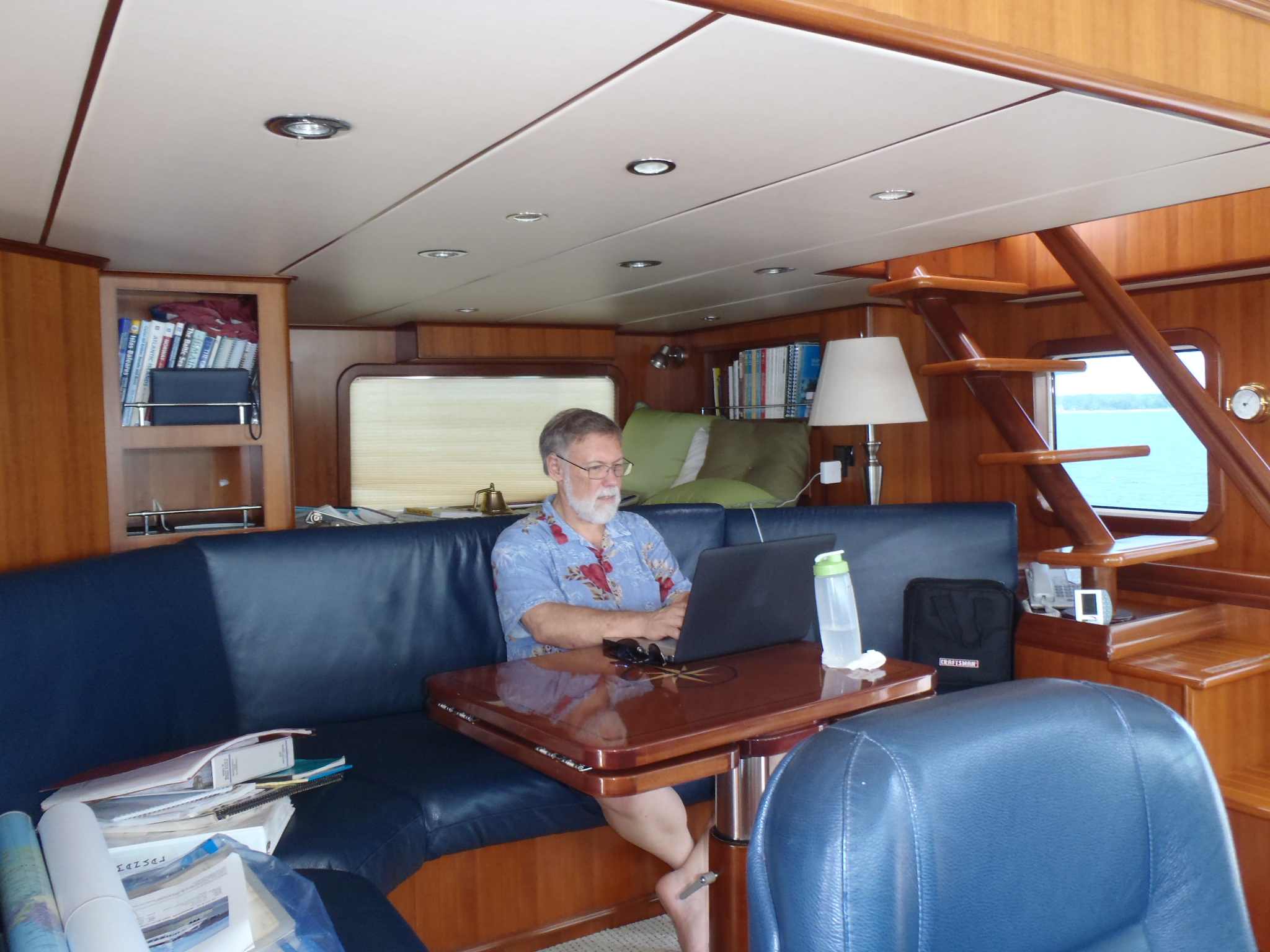
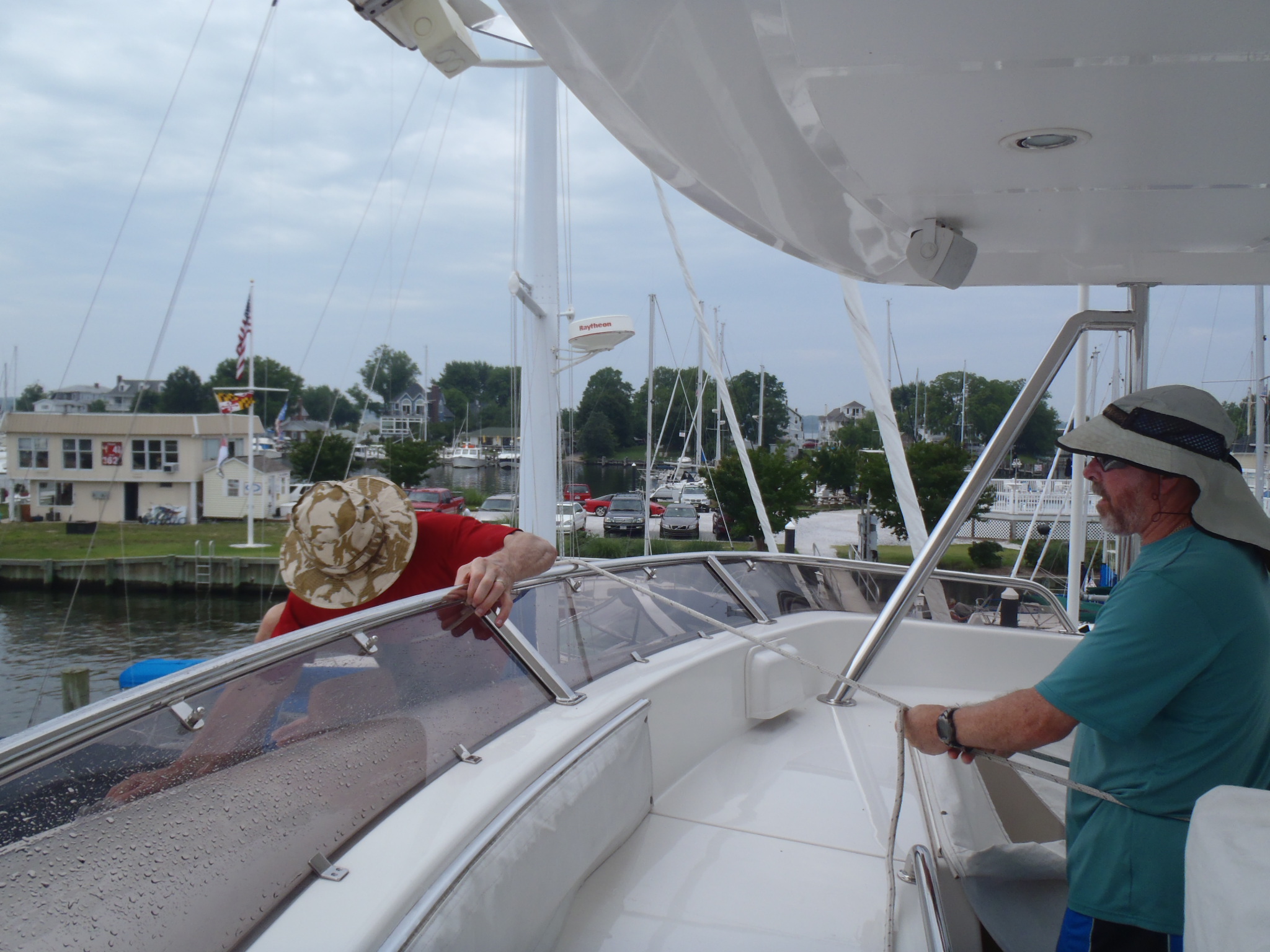
John and Leanne ponder autopilot problems
It was nice to use some of our new systems. Our satellite weather service allowed us to get up to date weather information instantly. We also became fairly proficient with many of the features of our new navigation software (Nobeltec Trident). We did, however, experience a few glitches, most notably with our AutoPilot system and satellite compass. The AutoPilot worked fine steering a course using its internal compass, but would not work when using the satellite compass, or when asked to steer a route (in Nav mode). We did some diagnostics and will spend some time in the coming weeks to diagnose and correct those problems. They did not interfere at all with our schedule and we were able to cruise north in the Gulf Stream (a strong current which flows northward along the east coast), which added more than 2 knots to our average speed (we cruised at close to 10 knots for much of the trip)!

Leanne's mackerel
We did not have great luck fishing for the first couple days. While underway in daylight hours only, we trail a fishing line behind the boat, waiting for a strike, at which point, the alarm is sounded by someone yelling “FISH, FISH”. The person on watch then slows the boat down, while someone else takes control of the rod and brings the fish in. Bradley and/or John then bring the fish aboard, determine whether it is a “keeper” and if so, prepare it for the fridge or freezer. Once the fish is landed, we return to cruising speed. Leanne’s first “strike” resulted in a good fight, only to find a large plastic bag at the end of the line! It’s really a shame how much plastic is in the oceans and how much damage it does! Well, there’s one less plastic bag now!
As we passed Cape Hatteras, we were making excellent time. Conditions were still perfect but we had caught only one small fish, a dolphin fish (mahi-mahi) which we had as an appetizer. Soon that was to change! In a span of just a few hours, we caught and kept 4 Spanish Mackerel and 2 tunas. We also caught and released 2 small tunas and 2 small mackerels. We were slowing down so often, we finally had to stop fishing or we would never arrive at our destination!

A US Warship at Sunset on the Chesapeake Bay
By sunset on Monday, we were at the entrance to the Chesapeake Bay. We passed over the Chesapeake Bay Bridge Tunnel, guided by the Cape Henry Tower. Because there is so much shipping traffic in the area, the Tower provides traffic control, much like air traffic control for airplanes. We were in contact with the Tower, and were provided with information about outbound ships so that we could steer clear of them. It was quite helpful to have their guidance, especially as it was now quite dark!
The most exciting moment came just before midnight that night, when suddenly our navigation system went completely dark! We no longer had a chart on our display to steer by. Fortunately, we had backup systems. We had a paper chart readily available. We soon determined that the new computer running the navigation software had crashed. Further investigation led us to the UPS unit (backup power supply) that the computer was plugged into. The UPS is supposed to power the computer in the event of a power failure. For some reason the UPS thought a power failure had occurred and had begun using its battery to power the computer. When its battery was depleted, the computer lost power and crashed. Since we had never actually lost power, we attributed the problem to the UPS unit. We plugged the computer into a direct power supply and soon were back up and online. A good lesson though – always be prepared in the event you lose one or more of your systems!

A Colonial Beach Family comes by for a look
We continued our cruise up the Chesapeake Bay to the Potomac River, then north to Colonial Beach. We planned to stay at the Colonial Beach Yacht Center, a marina I had found online. We knew it would be a bit of a tricky entrance, as the channel is just over 8 feet deep, barely enough to allow us in. Furthermore, because we had made excellent time, we were arriving at dead low tide. To top it off, we arrived on Tuesday, the one day the marina is closed. As we approached the entrance to Monroe Bay, we were able to raise a Navy Range boat on the radio and they provided us with some good information about depth of water and exact location of the marina. Bradley navigated us in with no problem and we found our assigned spot and soon were tied up alongside. The trip had taken less than 4 days and we still had the afternoon to begin washing the boat! (The boat always needs a washing after a trip in salt water).

Kathy vacuum seals tuna for the freezer
Colonial Beach is a great spot for us. The people there are very friendly and it is a charming town with beautiful and well kept homes. It’s a bit different than Old Port Cove, where we were neighbors with the 155-foot Privacy and the 164-foot Mine Games (a boat which you can charter for a mere $265,000 per WEEK). Here in Colonial Beach, WE are the big boat and several folks came by for a look. Leanne and I encountered two young men looking at the boat and they asked if it was ours. When we replied Yes, they began asking questions. One asked how we had got the boat here. We explained that we had come up the Atlantic Coast to the Chesapeake, then up to the Potomac River and in through the entrance to Monroe Bay. “No”, he said, “what I meant was How big a trailer you need to move that thing?” His concept of a boat was something that could be put in a trailer. His buddy was soon explaining to him that this boat could cruise anywhere in the world and did not need a trailer!
We’ll be in the Colonial Beach and Washington DC area for the next month or so. Plenty to explore around here! Click on any photo to enlarge. To see a video of Leanne in action (fishing), click here!


.
Heading North (August 2011)
Posted by Kathy Clark in Trips on August 12, 2011
August 12, 2011
The big news is that Leanne has now arrived from New Zealand, so the Shear Madness Crew – Bradley, Kathy, John, and Leanne – is now complete! We are all anxious to get to the fun part of cruising!

The Shear Madness Crew fuels up
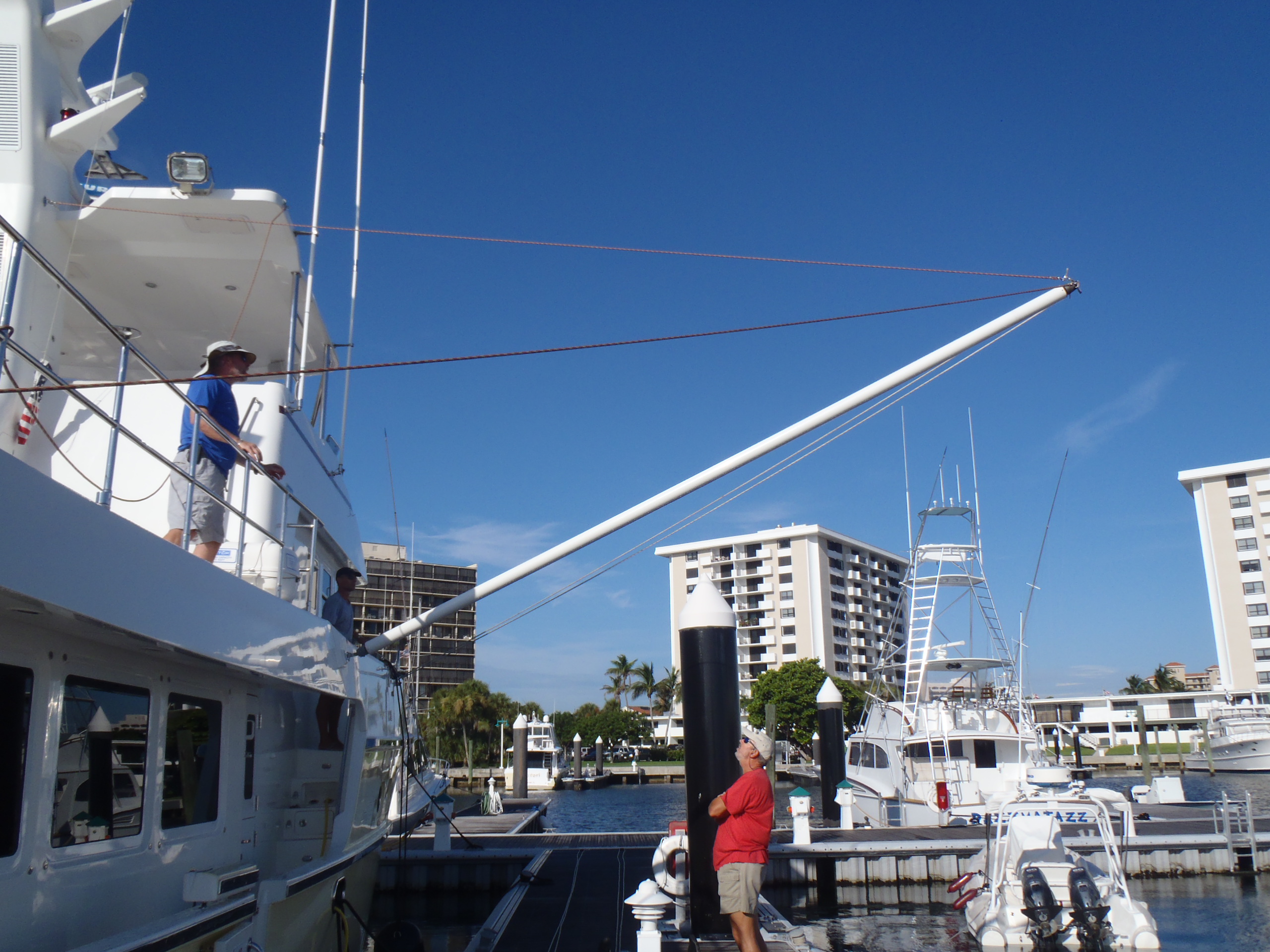
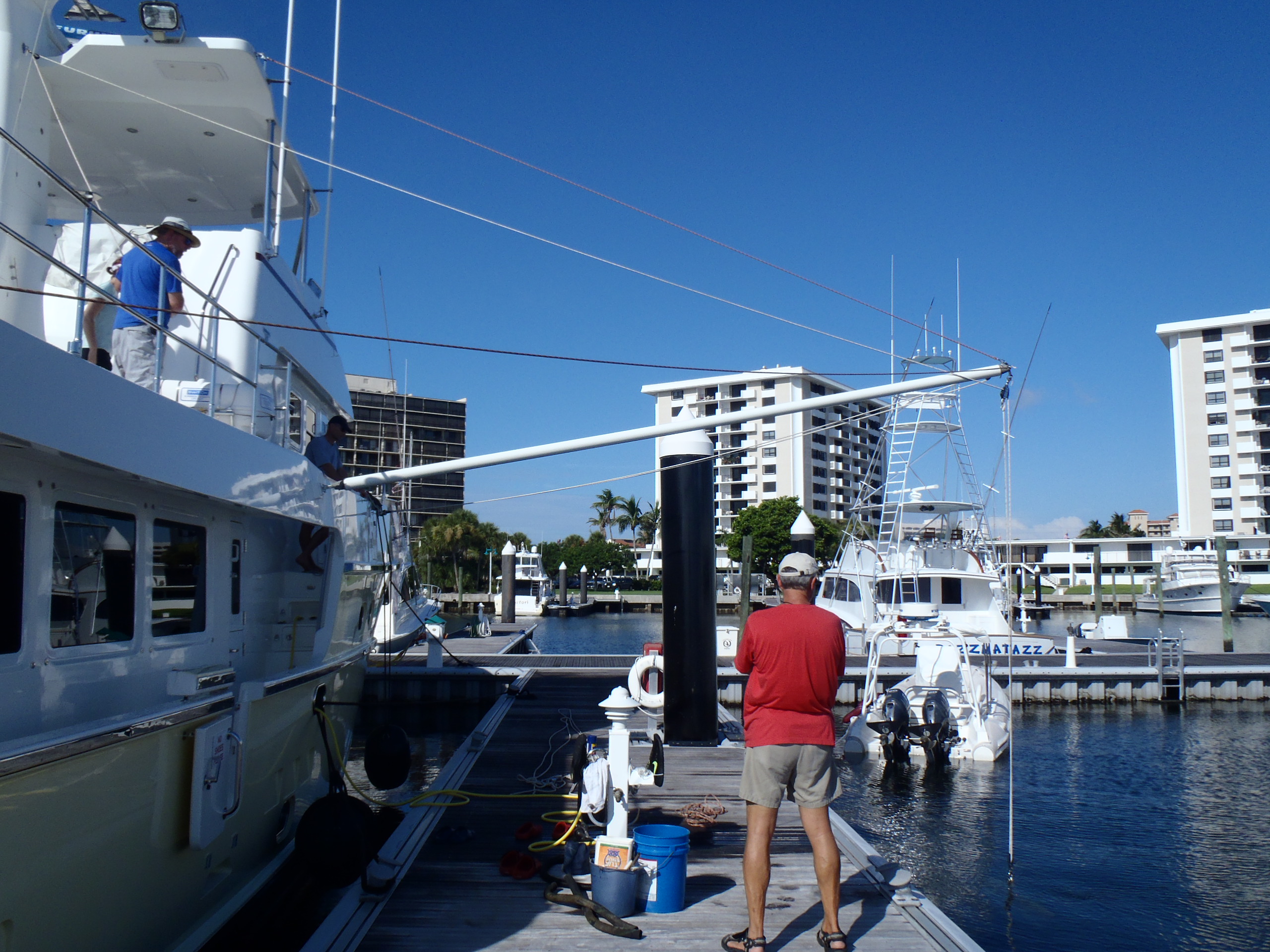
We have finally wrapped up our projects! The boat is clean and waxed, new electronics and communications systems are installed and ready to go, and gelcoat and finish repairs are complete. We also had some help from Bernie, who spent a couple hours helping us to figure out how to deploy our “flopper-stoppers”. This is a device that helps to stabilize the boat in a rough anchorage, greatly increasing the comfort. It consists of a pole (like a spinnaker pole on a sailboat) that goes out to the side to hang a “fish” (a metal weight that hangs in the water at a depth below the keel). After a few experiments, we determined which lines went where, how to control the pole when deploying and retrieving, and how to launch and retrieve the fish. I can’t say we are looking forward to an anchorage where we will need the flopper-stoppers, but we are ready! Note that we tested the flopper-stoppers while at a slip in a marina – this is NOT where they would actually be used.
We also had a visit from our good friends Richard and Maggie from Naples, who joined us to finish cleaning up and putting the boat back together (Maggie, not ALL guests are handed a vacuum cleaner on their first day aboard). We were able to finish up in time for a wonderful steak dinner and a well needed bit of relaxation. The only thing left was to fuel up! We visited the fuel dock and took on 1275 gallons of diesel – about a third of what we hold. This will be plenty to get us back up to the Chesapeake Bay, a trip of a little more than 800 miles. Sometime in the next few months, the boat will be hauled out of the water for some work on the bottom (this is done every 1-2 years) so we don’t want to have full tanks when hauling out. Richard and Maggie departed and are driving our car back to Naples for us.

Richard and Maggie come for a visit
We have now departed the marina and are stopped at anchor while John and Leanne are diving to clean the bottom. Bradley is assisting, but only snorkeling, as he has a slight cold which prevents him from diving (for you non-divers, diving requires the ability to clear your ears as you descend and pressure increases – you cannot do this when you have stuffy sinuses). We will soon pull up the anchor and embark on our journey – a non-stop (barring unforeseen emergencies) trip of 100+ hours.
We can’t wait to be back on the water!
Click on any photo to enlarge.
-
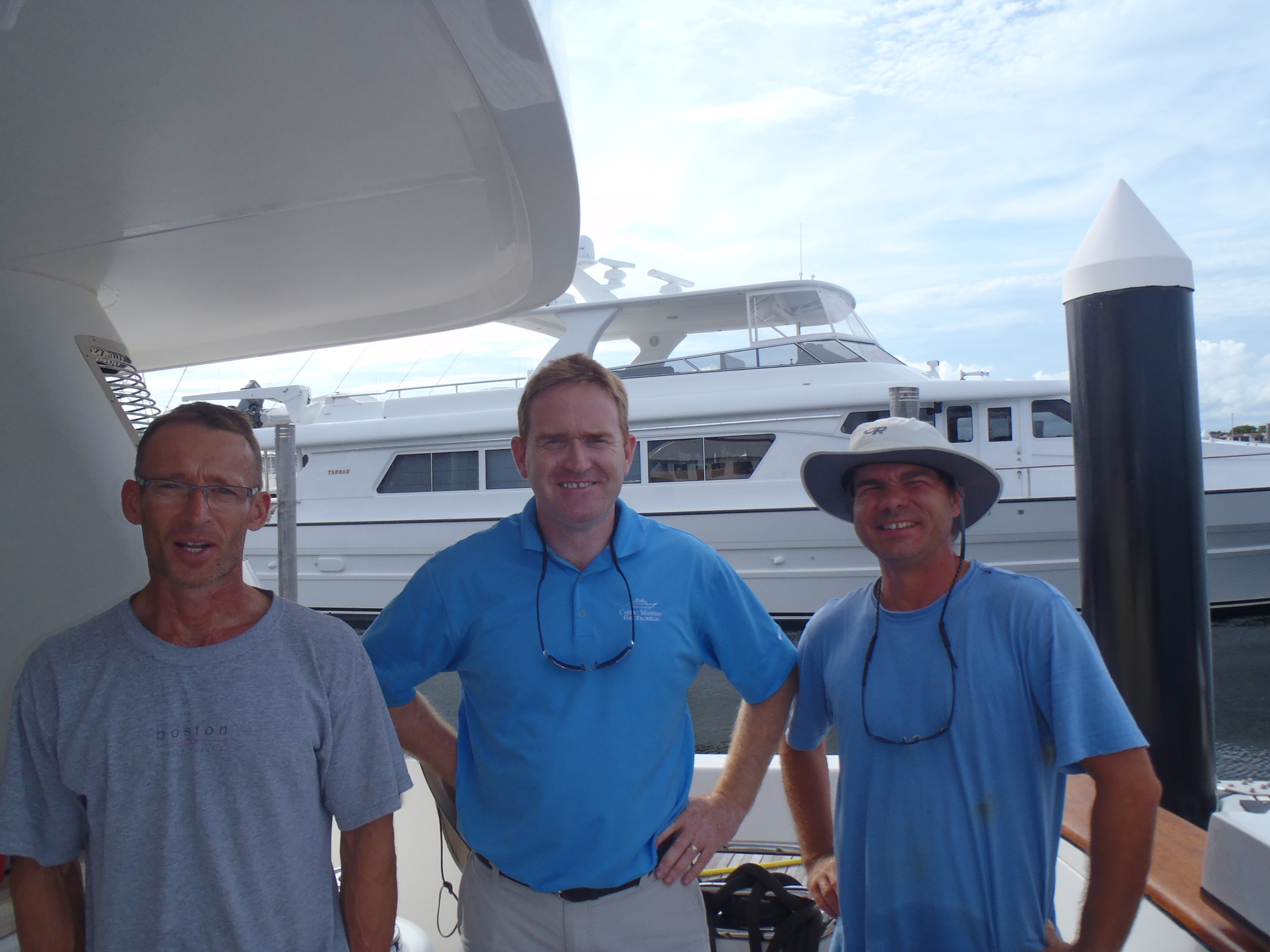
- John with Brian & Troy from Celtic Marine Electronics
-

- Johnny 5-Star and his detailing crew

-

- Bernie, Bradley, and John ready flopper-stoppers

-
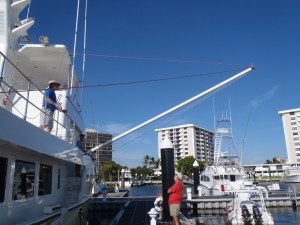
- Bernie oversees flopper-stopper test
-

- Flopper stopper deployed at dock
-
- Fueling Up

It’s Not Always Rainbows and Sunsets (August 2011)
Posted by Kathy Clark in Trips on August 3, 2011
August 3, 2011
When I tell friends about the cruising life, I often mention the isolated, peaceful anchorages, beautiful snorkeling, dolphins on the bow, seeing whales and turtles, catching (and eating) fish, and many other wonderful things. But life on a boat is not ALWAYS filled with those images. Sometimes there’s a lot of work to do and often that work is much more difficult than similar work on land.

Bradley and Brian work on entertainment system
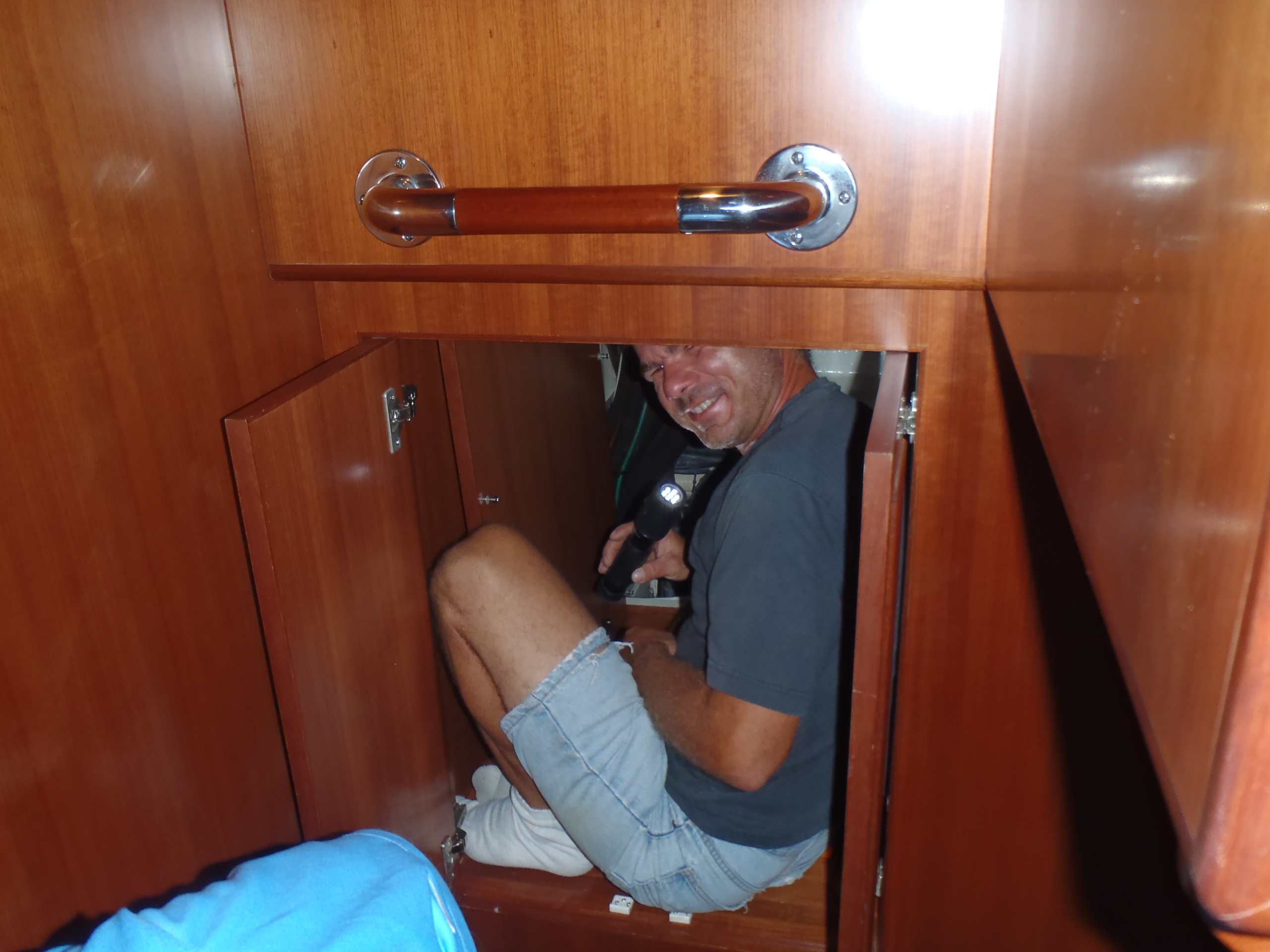
We arrived in North Palm Beach, FL a few weeks ago and since then have been working with various contractors to implement a variety of repairs and upgrades. First and foremost, Brian and Troy have been upgrading our onboard computers along with navigation and communications systems and software. They are also doing the upgrade of our primary entertainment system. Sounds easy enough, but every wire that needs to be run and every bit of hardware that needs to be installed requires working in small, tight spaces. Since the systems need to be designed to take a beating in rough seas, they need to be tightly secured. Then there is the dealing with various vendors like DirecTV, who insist in sending an installer for your new DVR. No amount of communication can make them understand that we just needed to have the box dropped off for our vendors to install. So when the installer arrived, we simply had to show him the hole he would have to work in and ask if he would mind just leaving the DVR for us to install. He dropped that box off and ran like an NFL running back!

Troy tucked into a small space
Fortunately Troy seems to enjoy cramming himself into the tiniest nooks and crannies on the boat. So we are nearly set now with two new Dell computers (one for our navigation systems and one for our communications systems), new electronic charting software and charts (Nobeltec Trident), new batteries in our satellite compass (has to be done at at Brian’s workshop, requiring an un-install and re-install), new wiring to allow our monitors to display what we want, a boat-wide wi-fi that provides an internet connection via either an AT&T broadband card, marina wireless systems, or satellite, a satellite weather service, satellite telephone, and DirecTV.
We’re also doing maintenance and repairs on our Air Conditioning system (by JR) and stern thruster (see the post about the hydraulics problem in November 2010 – this is being repaired by James) as well as having the boat detailed (cleaning, compounding, and waxing by Johnny 5-Star). Unlike your car, detailing the boat takes a crew of five people a full week to complete! In addition, we’re doing gelcoat repairs (Gelcoat Jeff is fixing cracks and other problems with the finish that need to be addressed before they get worse), have replaced a motor in the flushing unit of one of the toilets (John and Bradley), and done preventive maintenance on the transmissions (James, John, and Bradley).
Our days begin early with an hour of walking, running, biking, or pilates before breakfast. About 8am we begin working with contractors, unpacking cabinets to gain access, re-packing cabinets so we can unpack the next one, running to West Marine or Home Depot to pick up something we need, testing new systems as they are installed, re-testing when the next thing is installed – well, you get the idea! Usually we look up at some point and wonder how it got to be 7pm already!

John installs Toilet Pump
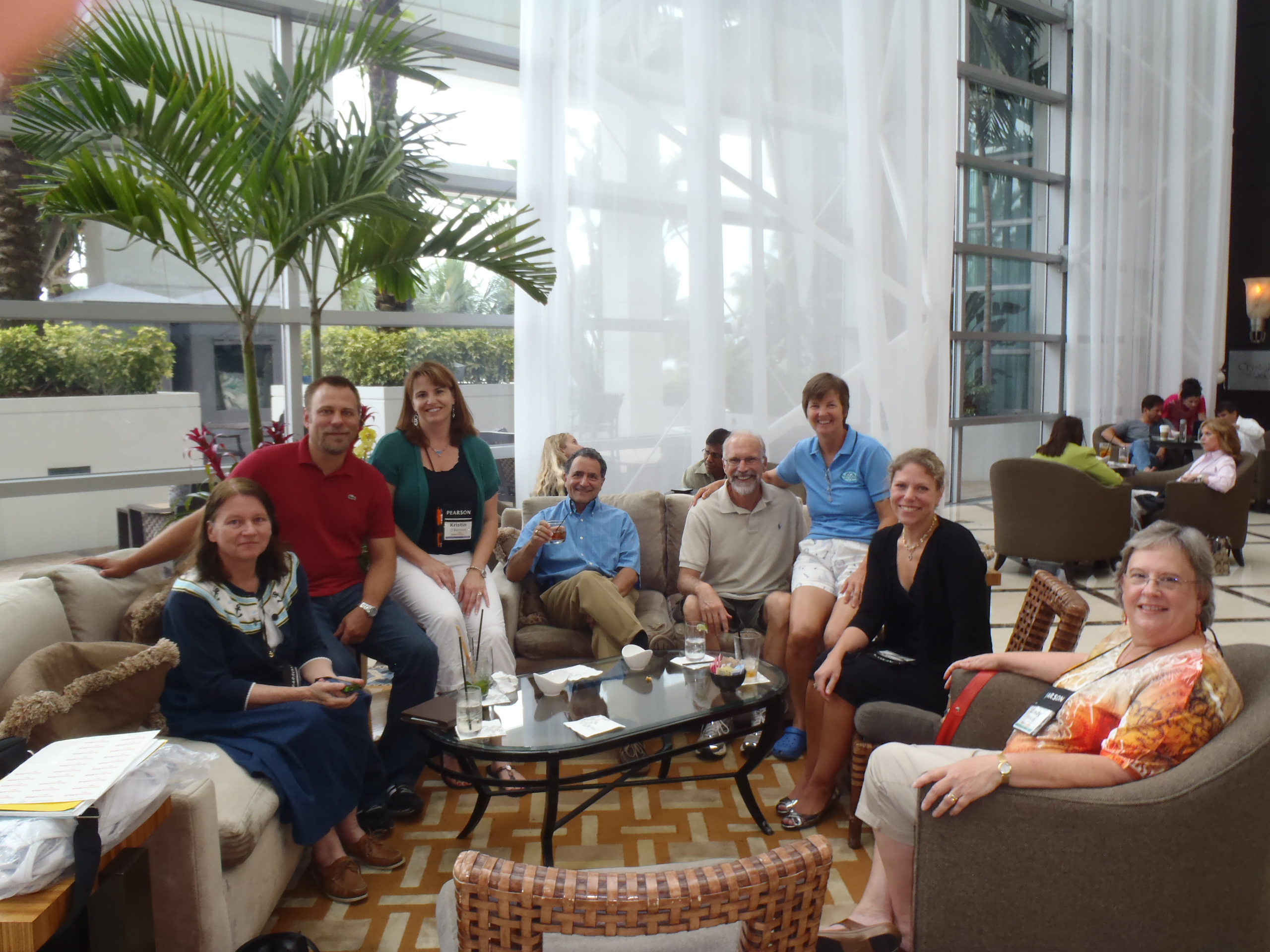
I did have a chance to catch up with some of my former colleagues from Smarthinking who were in Hollywood, FL for a sales meeting. Chuck took the Tri-Rail train up and we had a nice visit on the boat, then headed back to Hollywood for drinks with others from Smarthinking. I also had a chance to play golf with our friend Doug, and for the first time I had three birdies in one round!
We have just moved our boat to the North side of the marina where there is more room for the detailing crew to use their waxing machine without splattering other boats. We are just a couple slips down now from a well-known yacht called Privacy. Our focus now is on the weather, as we are watching Tropical Storm Emily and hoping she doesn’t intend to make a visit to Florida! In the meantime, though we don’t see the sun set from here, we do get some pretty nice sunrises!
Click to enlarge any photos. Also check out the Video page for a little video about the cruising life (this is a test of my new video editing toy)!
-

- Troy in another awkward space

-

- Tools, equipment, and wires everywhere

-

- John after working in engine room

-

- Chuck visits Shear Madness

-

- Kathy visits the Smarthinking crew in Hollywood
-

- Troy looks right at home in this cabinet
-

- Sunrises are nice here!

-
- Gelcoat Jeff applies oil to the teak rail

Four and a Half Fish and a Mean Little Shark! (July 2011)
Posted by Kathy Clark in Trips on July 17, 2011
July 17, 2011

John readies the fishing gear
As we departed Charleston to head to Palm Beach, the engines were humming, weather was nice, and seas were calm. It was time to try out our new FISHING GEAR! Soon a line was trailing behind the boat waiting for a fish to strike. Our biggest concern was how we would know when a fish bit. On the sailboat it was easy – the fishing pole was near the helm and there was no engine noise, so the clicker on the reel when line starts to be taken is unmistakable. But how would we hear it on a power boat with the engines going? It would be a while before we knew. After waiting and watching for a couple hours, we soon returned to our normal routine. I was on watch in the flybridge when suddenly I heard a distinct zzzzzzzzzzzzzzz sound – we had a fish! The alarm was sounded – that is I screamed FISH at the top of my lungs, raced down to disengage our hydraulic alternators (which require the engines to be running at a high RPM), then slowed the boat down (which turns out to be much easier on a power boat than on a sailboat!). Soon John was reeling in the first fish. It was exciting, but it was a little guy – a mackerel I think. A good test but not big enough to keep, so soon he was swimming away with his own story to tell.

Half a fish - We were robbed!
The line went back out and it wasn’t long before I heard it again! “FISH!”, I yelled. This time Bradley took the rod. It seemed like he had something a little larger on the line. It was putting up a bit of a fight and giving Bradley a bit of a workout. But then it seemed perhaps we had lost it as the line got noticeably easier to bring in. Was there or wasn’t there a fish still on the end? There was a lot of line out and as it finally came into view it did indeed look like a small fish was there. But it also had a strange motion through the water. What was going on? Soon we had the answer as we pulled HALF a fish out of the water. It had been a good sized one, but a hungry larger fish had helped himself to a large bite along the way. We were robbed!
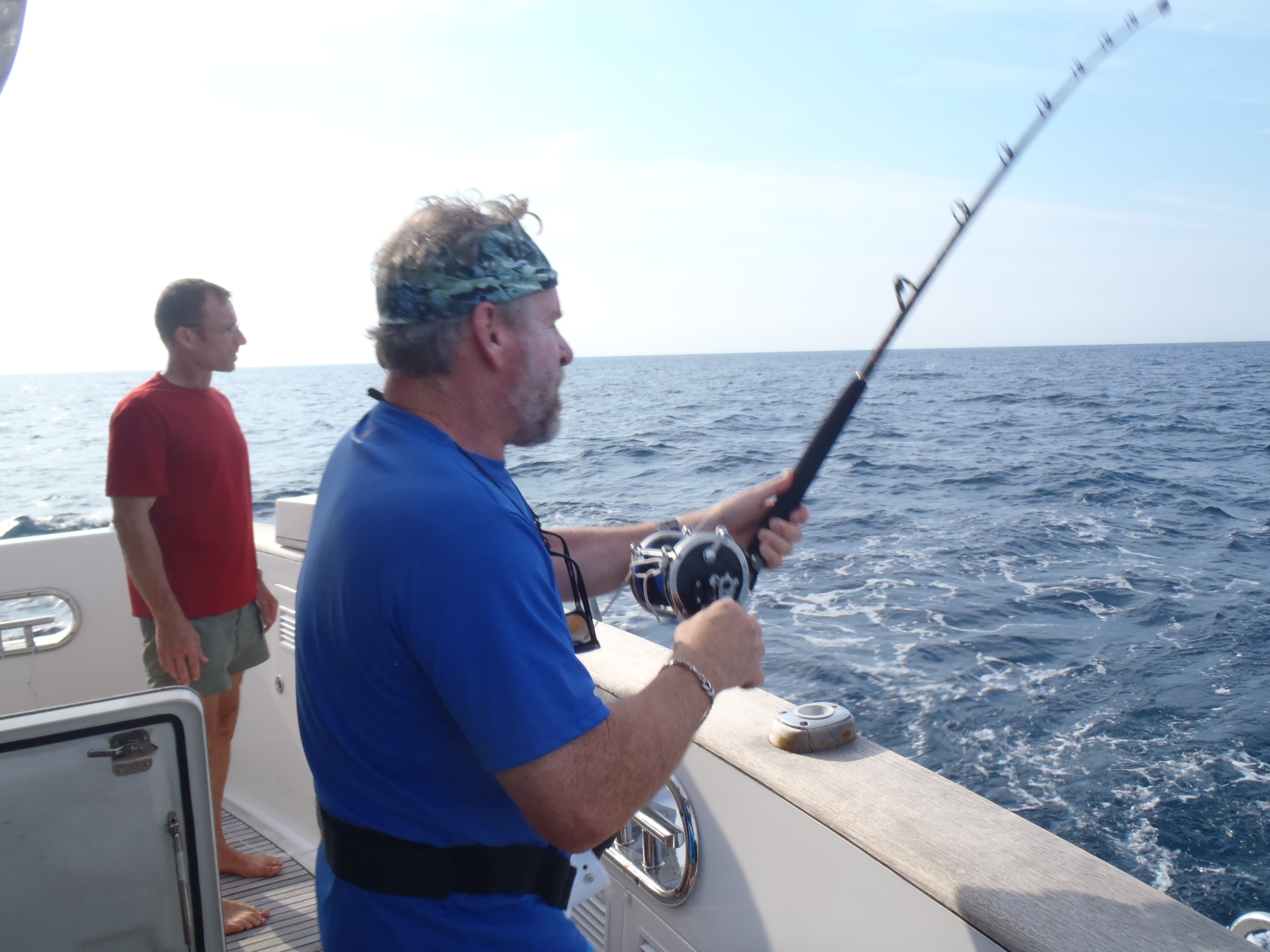
The third time’s the charm as they say, so out went the line again. Again, after we had stopped thinking about it, the line went out and the alarm was sounded. Everyone went to their positions, with Bradley grabbing the pole, setting the brake, and beginning the process of bringing in the fish. I slowed the boat while John readied the gaff and donned gloves to land the fish. This one was a fighter that had taken lots of line out. It gave Bradley quite a workout before finally coming aboard. A lovely (and whole!) tuna! Soon it was aboard and for the first time we got to use our “fish table”, an addition to the boat we had made while in Solomon’s. It’s a fold-down table designed to allow work on a fish on the swim platform so that it doesn’t get brought onto the boat. It worked beautifully and soon the tuna was in the fridge ready for a lovely dinner. It had been a good day.
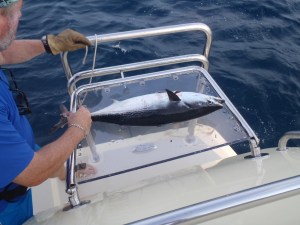
Tuna on the fish table
The next day, the line went out again. Hours passed with not a hint of a fish. But sure enough, once we stopped thinking about it, out went the line and John got his chance. Soon he had landed another tuna, very similar to the first. Fortunately we are all tuna lovers and there was plenty of room in our freezer. By now, we were getting our procedure down and this one was caught and cut up in no time. Then it was my turn. As the next fish was hooked, I took the rod and reeled it in. It didn’t feel like a huge one and it wasn’t. Another small mackerel, which we released. But we had all had a chance to catch a fish and we had several nice tuna dinners in the fridge. All in all, a great success!
Aside from the fishing, the trip south was simply amazing. Again we had perfect weather and very calm seas. We even had a near-full moon at night, giving us great visibility. The only question was whether we had enough fuel to make it all the way to Palm Beach. We knew we had enough in our tanks, but were not completely sure that every bit of fuel in the tanks was useable – we’ve heard of other Nordhavn owners who can’t get the last 100 gallons or so out of their tanks. So we monitored the situation closely and ultimately transferred all the fuel from our port tank into our starboard tank – proving we could indeed get almost all of it out and giving us confidence we would make it to Palm Beach.

Sunset at Cape Canaveral
We arrived just outside Singer Island on Thursday morning and decided to anchor the boat in the relatively calm and very clear water outside the inlet so that John and Bradley could dive to clean and inspect the bottom of the boat. As soon as we had anchored and the guys had donned their dive gear, we noticed a very small shark swimming around the back of the boat. We have all dived among sharks many times, and this one did not seem to pose any threat. Most sharks are harmless and will not approach a diver – it’s usually hard to even get close to a shark. And this one was perhaps two feet long, just a little guy. So into the water they went. But out they came again as the little shark was actually threatening John. John kicked him a couple times but he didn’t back off – and even a little guy has some very sharp teeth. We watched the little shark swim around for awhile and debated what to do. Its behavior sure did seem abnormal – perhaps it was accustomed to fishing boats which provide free meals, but we decided not to antagonize him. We elected to raise the anchor and move a bit further down. No sign of predators this time, so John and Bradley went in again. There was a fairly strong current, so I decided to take a quick dip to cool off and then stayed on board rather than helping in the water. John and Bradley surfaced after a couple hours, out of air and exhausted from fighting the current. After lunch and a rest, one of them (I’ll never tell which on) went back for another dive to finish the job. Finally, the inspection and cleaning was complete and everyone was safely back on board. We raised anchor and headed into Old Port Cove Marina, where were soon in a berth, connected to shore power, and enjoying fresh grilled tuna steaks!
The next two days were spent cleaning the boat – after every trip out in seawater, the boat needs a freshwater cleaning and chamois drying to protect the wax finish. It’s a lot of work and took two days, but now she’s happy and clean. We’ll be here for about a month to have some upgrades done to our electronics and entertainment systems, fix a few things, and have the boat professionally detailed before heading north again in August.
Click on any photo to enlarge.
-
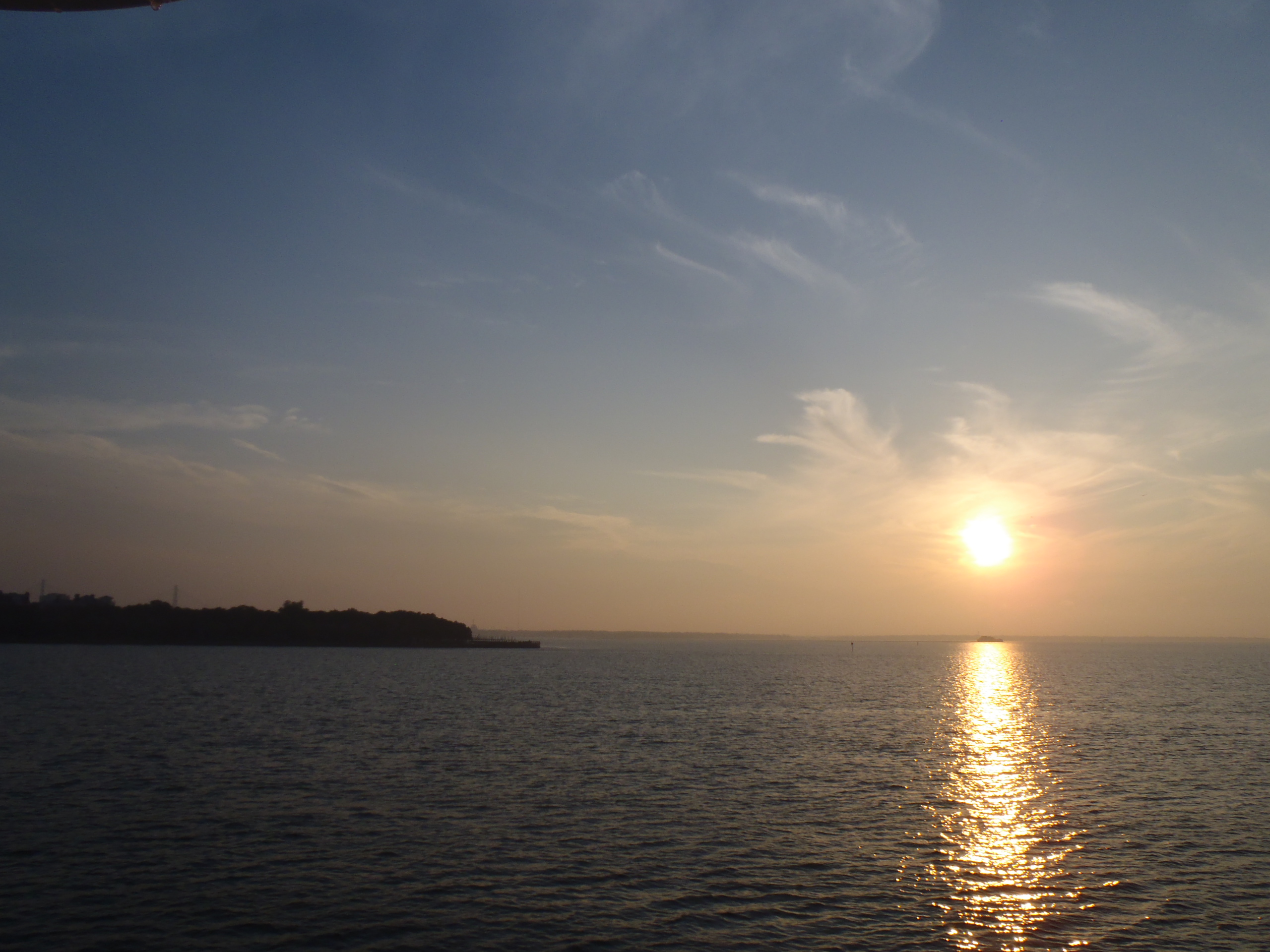
- Sunrise leaving Charleston
-

- Bradley’s tuna

-

- Shower underway in calm seas

-
- John’s Tuna

-
- Tuna Steak

-

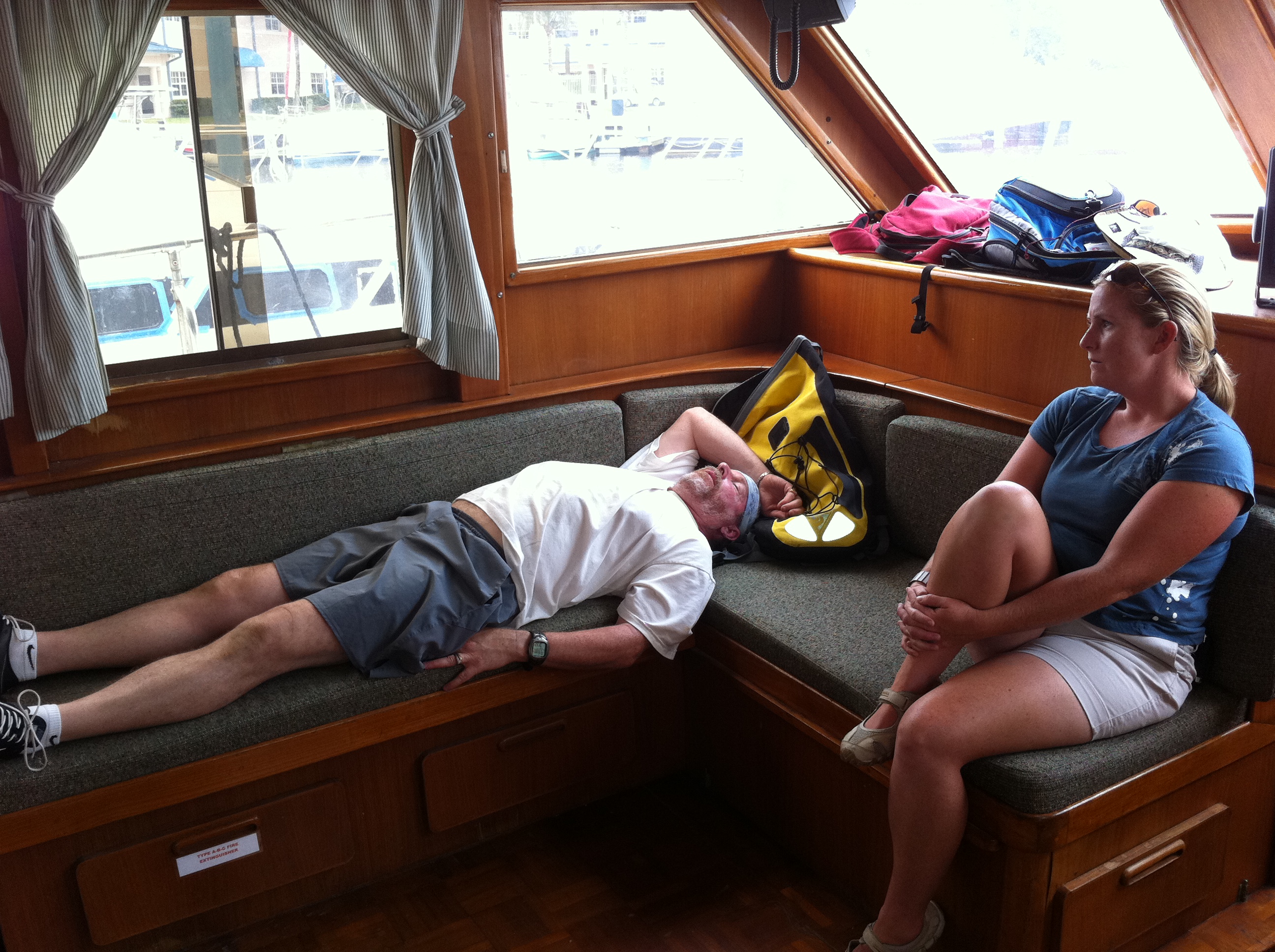
- John catches up on sleep

-
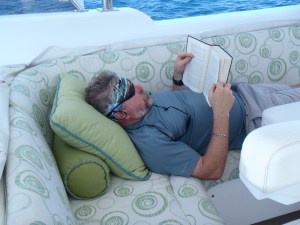
- Bradley reads a real book

-

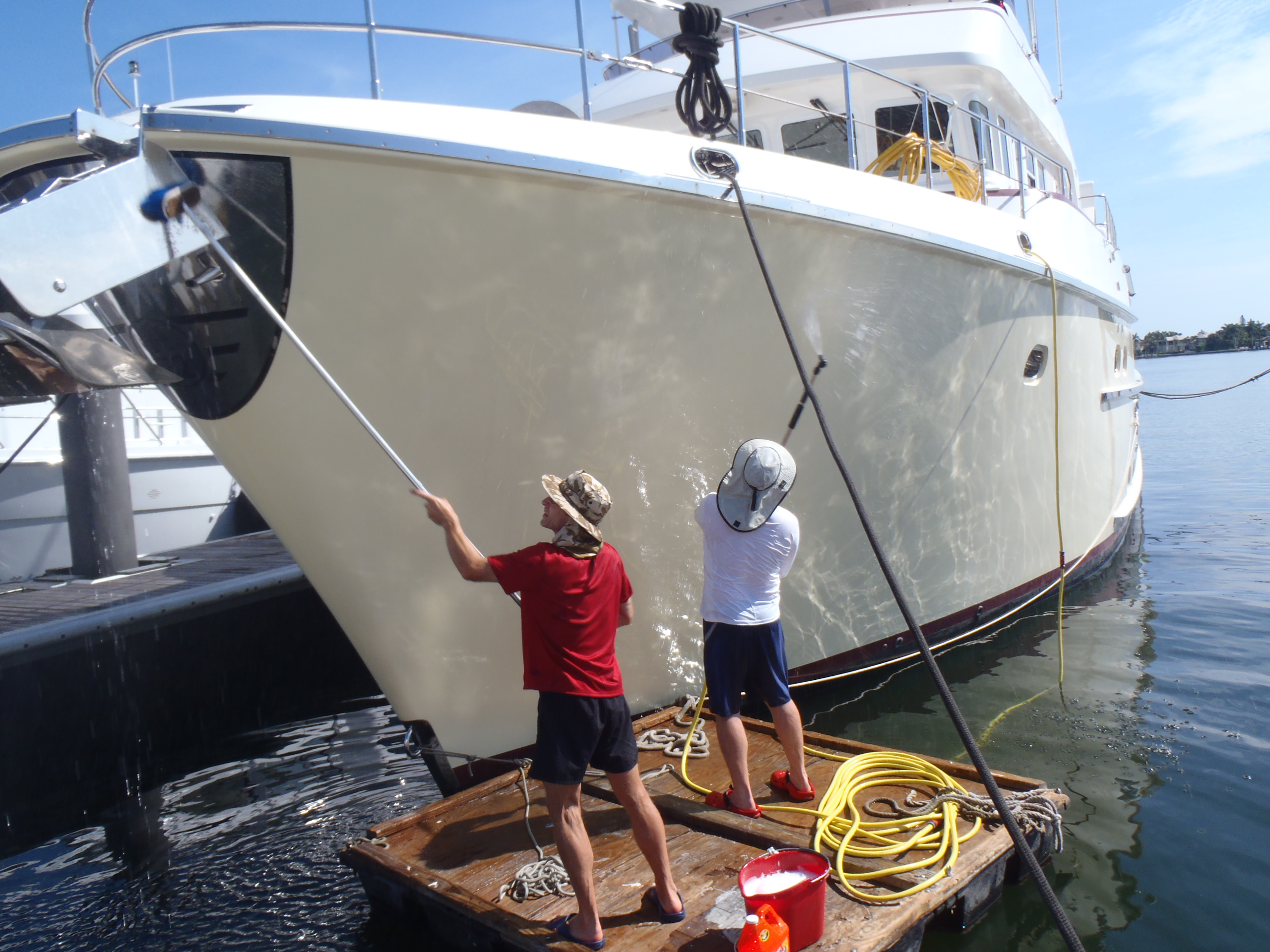
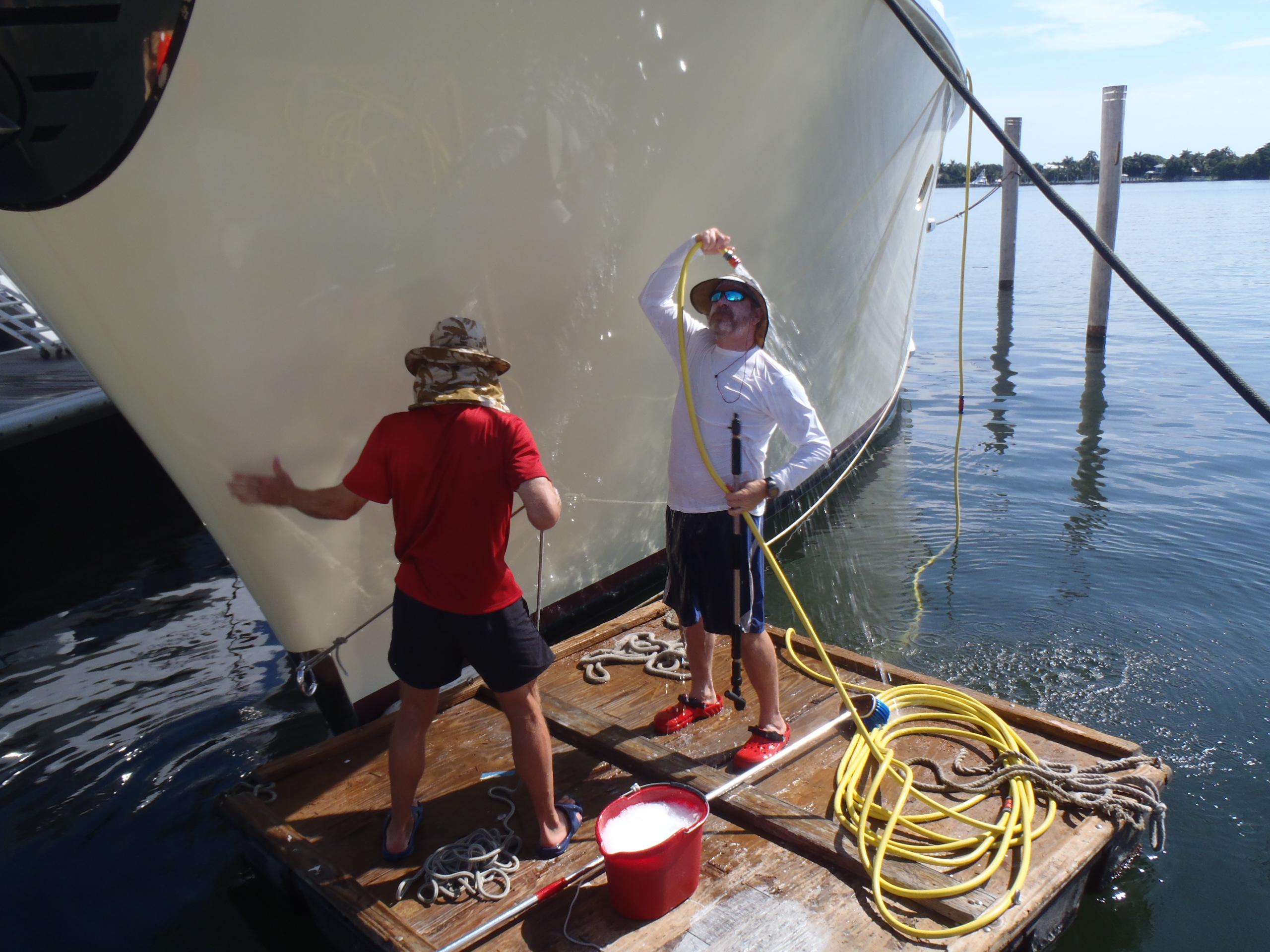
- Cleaning the boat
-
- Keeping cool while cleaning the boat on a hot day
-

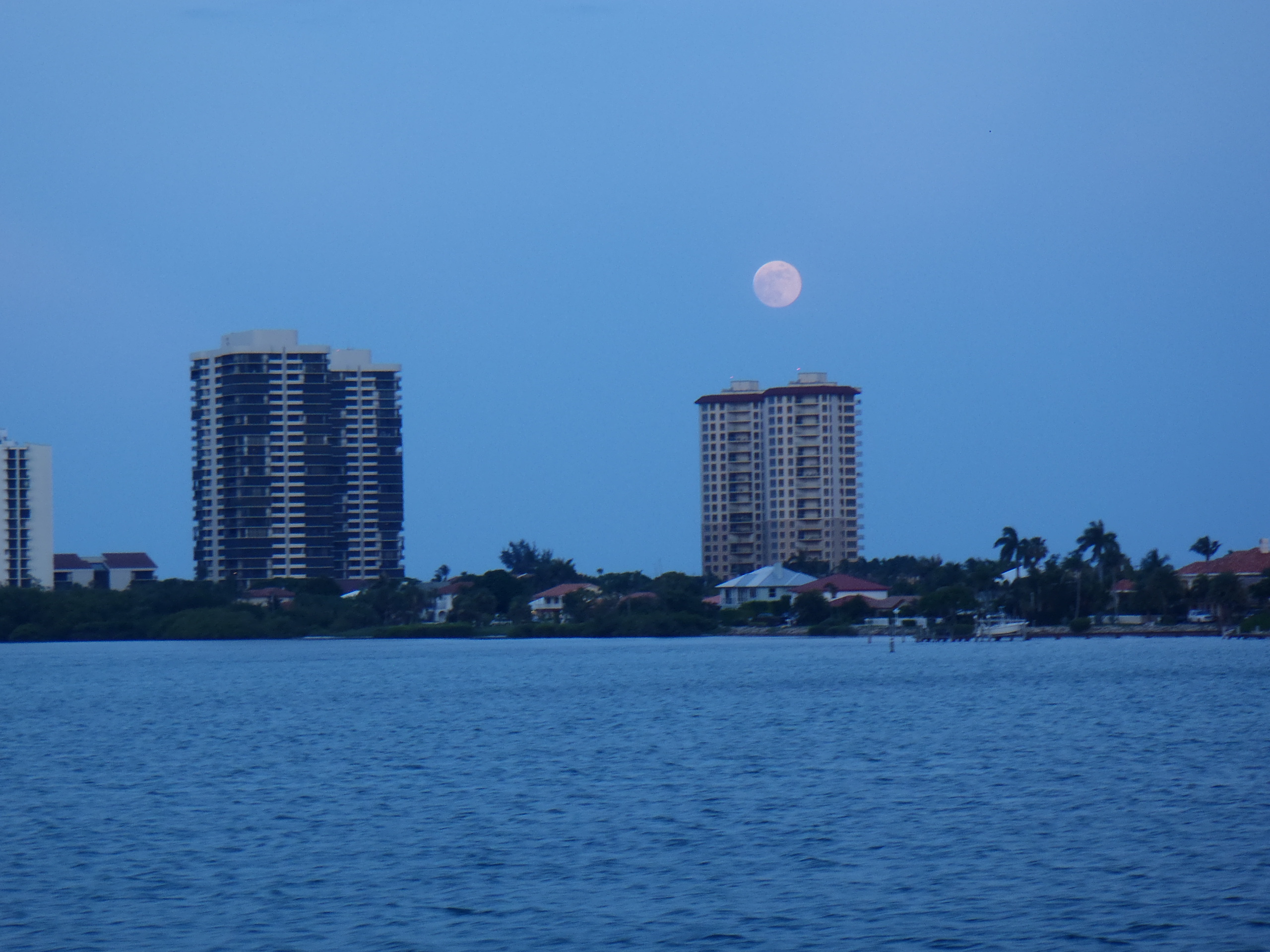
- Full Moon over Singer Island
Return to Charleston (July 2011)
Posted by Kathy Clark in Trips on July 14, 2011
July 10, 2011
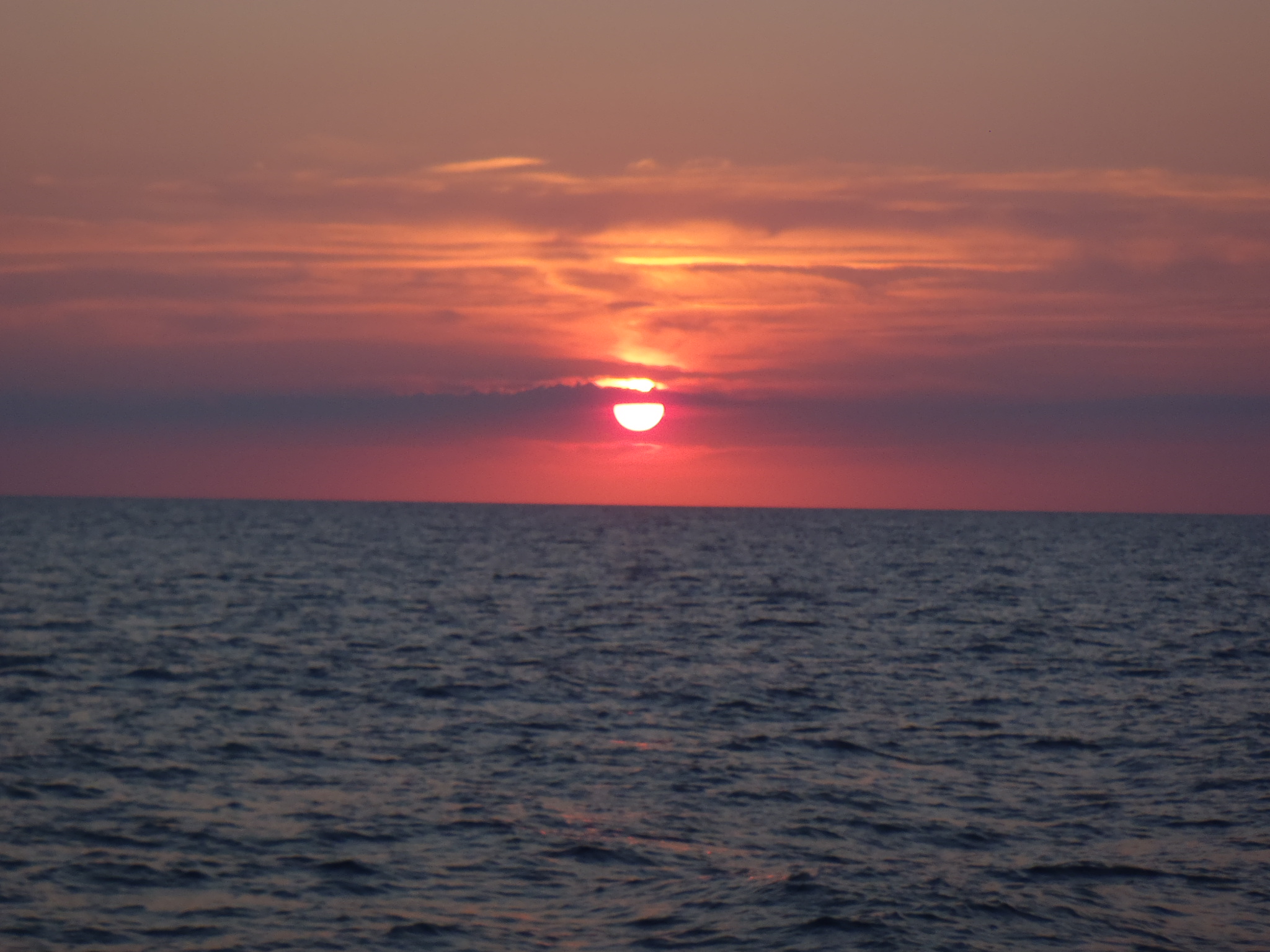
The passage to Charleston was fabulous. Great weather, calm seas, dolphins on the bow, beautiful sunrises and sunsets.
Anchored in Charleston Harbor
Our plan was to anchor in Charleston for a few days, enjoy the 4th of July, visit some friends, then head on to Cape Canaveral to catch the very last Space Shuttle launch. The first part of that plan worked out spectacularly well. We anchored in Charleston Harbor, just near Fort Sumter, with calm conditions and a great weather forecast. Our friends Ed and Marilynn have a house in Folly Beach, just outside Charleston, so we arranged to visit them for lunch on the 4th of July. We thought we could get there in our tender, so we launched it on the 3rdand headed out for some exploration. Folly Beach is on Folly Island, bordered by the Atlantic on one side and the Folly River on the other. We needed to get to the river, necessitating an hour long trip to the end of the island (very different being in the ocean in an 18 foot open boat than on an ocean going 72-footer), through an inlet and up the river. We stopped at a local marina for drinks and asked about the possibility of getting back to the harbor via the river rather than having to go back out and around. We were told that we could get through at Lighthouse Inlet, greatly reducing the amount of ocean time. It worked, but it was a little nerve-wracking.

Visiting Marilynn and Ed
The lighthouse exists as a warning of shoals and shallow water with only small gaps to get through, and then only in small boats. To top it off, it was low tide, so we had to go slow through turbulent waters, hoping we could make it. We did, and returned the next day for a wonderful lunch with Ed and Marilynn followed by a tour of their gorgeous house!
We returned to Shear Madness for a 4th of July dinner and fireworks. We knew there was a big fireworks display planned at the Yorktown, an old aircraft carrier which is now a museum and for which we had a terrific view from our anchorage. What we did not know was that from our vantage point, we would be able to see so many different fireworks displays! At one time, we counted over a dozen active at the same time along the skyline, ranging from small local displays to the huge productions at Sullivan Island and the Yorktown. It was the most amazing fireworks any of us have ever seen! If you ever have a chance to be in Charleston Harbor on the 4th, don’t pass it up!

4th of July dinner before the fireworks
Next on the agenda was a trip up the intracoastal waterway to visit fellow Nordhavn owners David and Debbie, who have a house there. Once again, we took to the tender and cruised about twenty miles, stopping for a light lunch at a great place along the way. David and Debbie have a spectacular house right on the water (unfortunately not deep enough for their Nordhavn), and they are also friends of Bob Senter, so we convened a meeting of the Charleston chapter of the Bob Senter Fan Club. After dinner and a light supper, we headed back to Charleston Harbor.
On the 6th, we headed by tender over to Daniel Island to visit Liz,the paddleboarder we had met last year while hanging out in Charleston to dodge hurricanes. Liz and her husband, Brown, have three great kids, who are home-schooled three days a week and attend regular school two days a week. We suggested to Liz that they should consider buying a boat and cruising with their kids for a few years. We have her convinced and she immediately went home to tell Brown they need to sell their house.

At David and Debbie's house on the ICW
We returned to the boat after a stop at the grocery store with the intention of pulling anchor and setting off to Cape Canaveral for the shuttle launch. Unfortunatley, just as we got underway, we encountered an engine problem. To make a long story short, we had changed a fuel filter during which a fuel return valve was shut off. It was never re-opened, causing excess pressure in the engine fuel cooler and ultimately blowing a gasket. Fortunately only the port engine was affected so we were able to make it to nearby Ashley Marina where we made arrangements for repairs. We lined up a technician to come the next day (Thursday), which he did. He disassembled the fuel cooler, diagnosed the problem, and made arrangements to have parts shipped overnight to arrive on Friday. All went well, until Chad returned the next day with the parts, only to discover that the order was incorrect – we needed six gaskets in total – 2 of one kind and 4 of another – and it seems that we got 4 of the first and 2 of the second! Very frustrating. We tracked down the problem to an error in the warehouse, but the re-order meant the proper gaskets would not arrive until Monday, leaving us to enjoy the weekend in Charleston. We also realized that the whole problem was likely caused by the fact that we had bananas on board – we have had prior experience with the legend that bananas are bad luck on a boat (see http://oyster56.com/0310_bananas.htm ). Even though all bananas had been eaten before raising anchor, the peels were still on board and they were still in our stomachs!

Chad works on the fuel cooler on port side engine
As we knew from last year, Charleston is a marvelous place to be stuck! At Ashley Marina, another Nordhavn couple, Chris and Sarah, invited us over for drinks on their 62 foot Pandana. We had met them last year in Palm Beach so it was good to re-connect. We also said goodbye to Lugger Bob, who had to fly home from Charleston given our delay now in getting to Palm Beach. It was fabulous to have had him aboard – not only is he an expert at his work, but he’s now a fast friend! We met another couple on a sailboat, Rich and Kate, who were kind enough to loan us their car so that we could travel to Daniel Island for a dinner with Liz, Brown, and the kids. We also enjoyed a night out at Poogan’s Porch for some good ole Southern food! On Monday, the proper parts arrived, repairs were completed and a test run revealed that everything seemed to be operating properly. After a good nights sleep, we set off bright and early for Palm Beach (no longer planning to stop in Cape Canaveral as the shuttle had launched without us!). The weather forecast was favorable and we hope for a smooth and comfortable trip. Needless to say, there are no bananas on board!
Click to enlarge any photo……..
-
- Bradley on passage to Charleston

-

- Bradley and Bob watch “the end” of the dolphin show

-
- Dinner while on passage

-

- Breakfast with Liz (Bob, Bradley, Kathy, Liz, John)

-
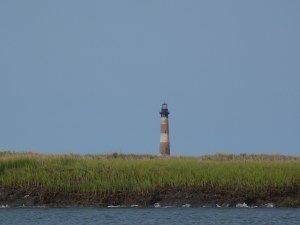
- Folly Beach Lighthouse

-

- Bob at Fort Sumter

-
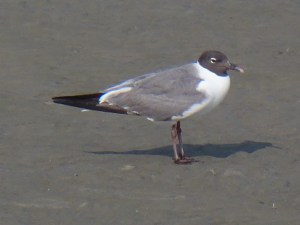
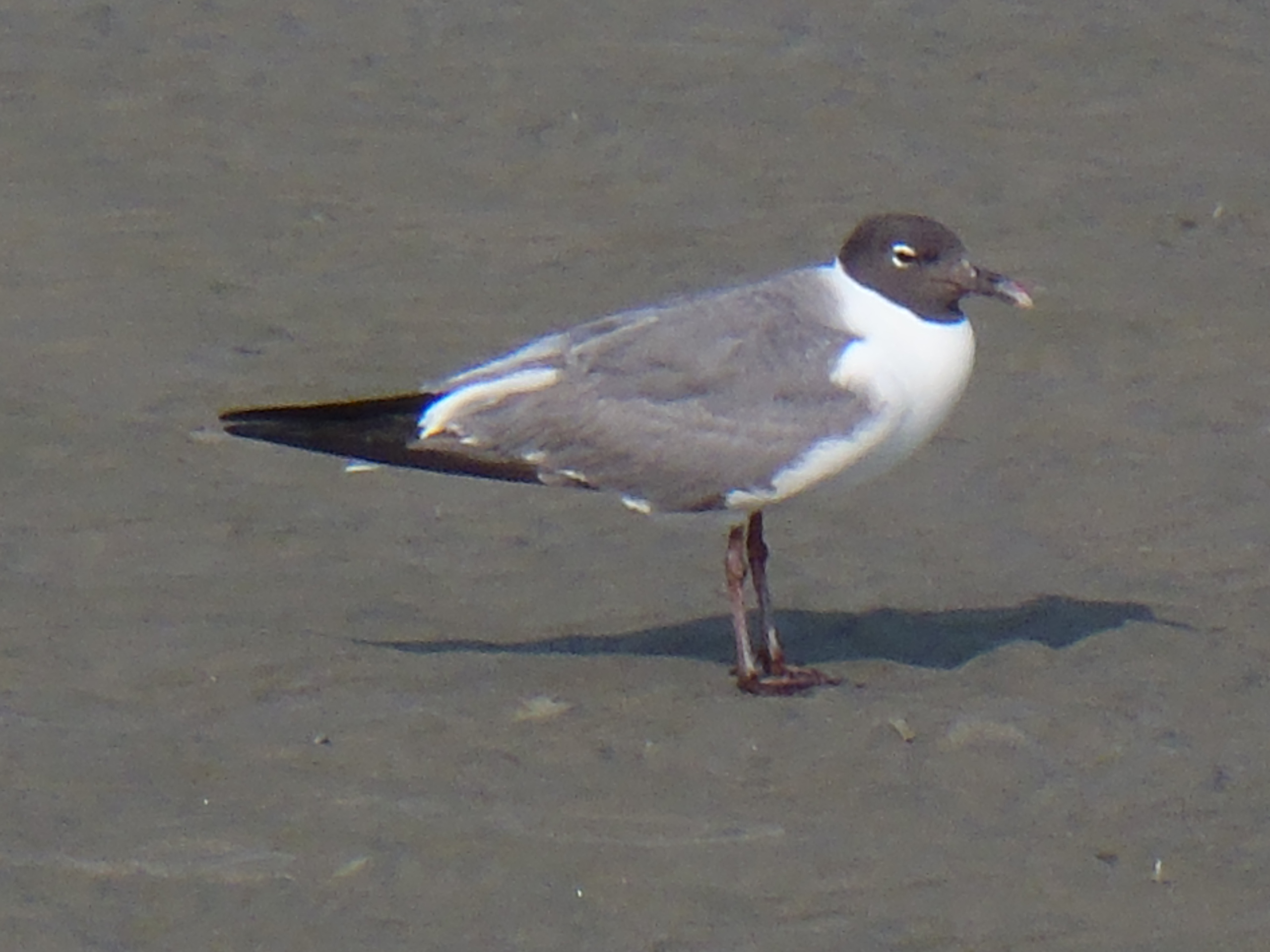
- Bird near Fort Sumter
-
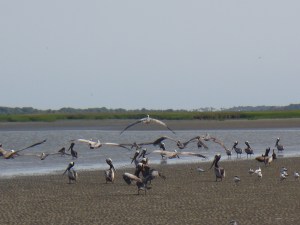
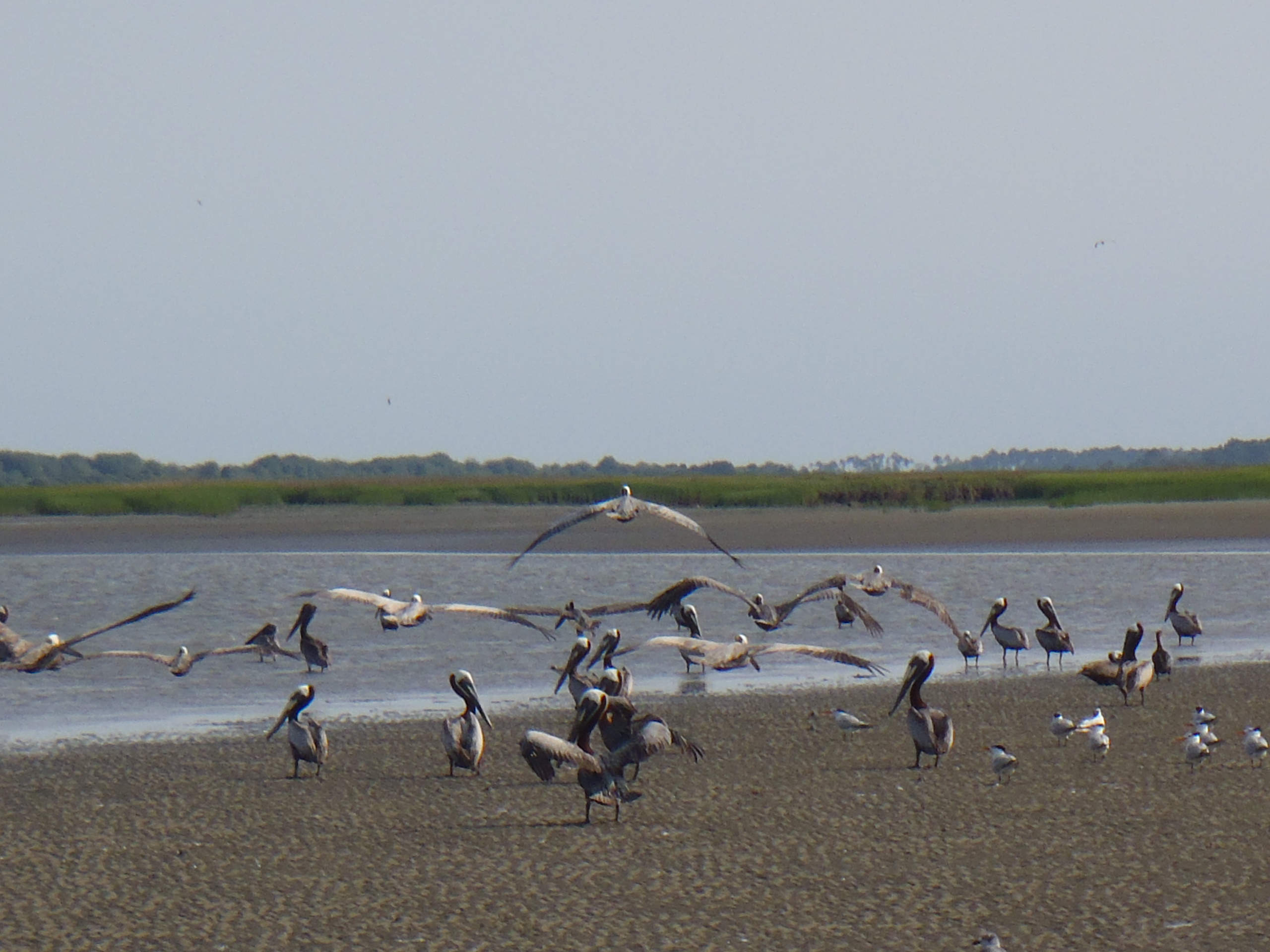
- Pelicans on the beach
-

- Port engine fuel cooler disassembled (it only LOOKS like blood)

-

- Aboard Pandana with Chris and Sarah (and Piper the Dog and Willie the cat)

The Adventure Begins! (June 2011)
Posted by Kathy Clark in Trips on July 3, 2011
June 29, 2011
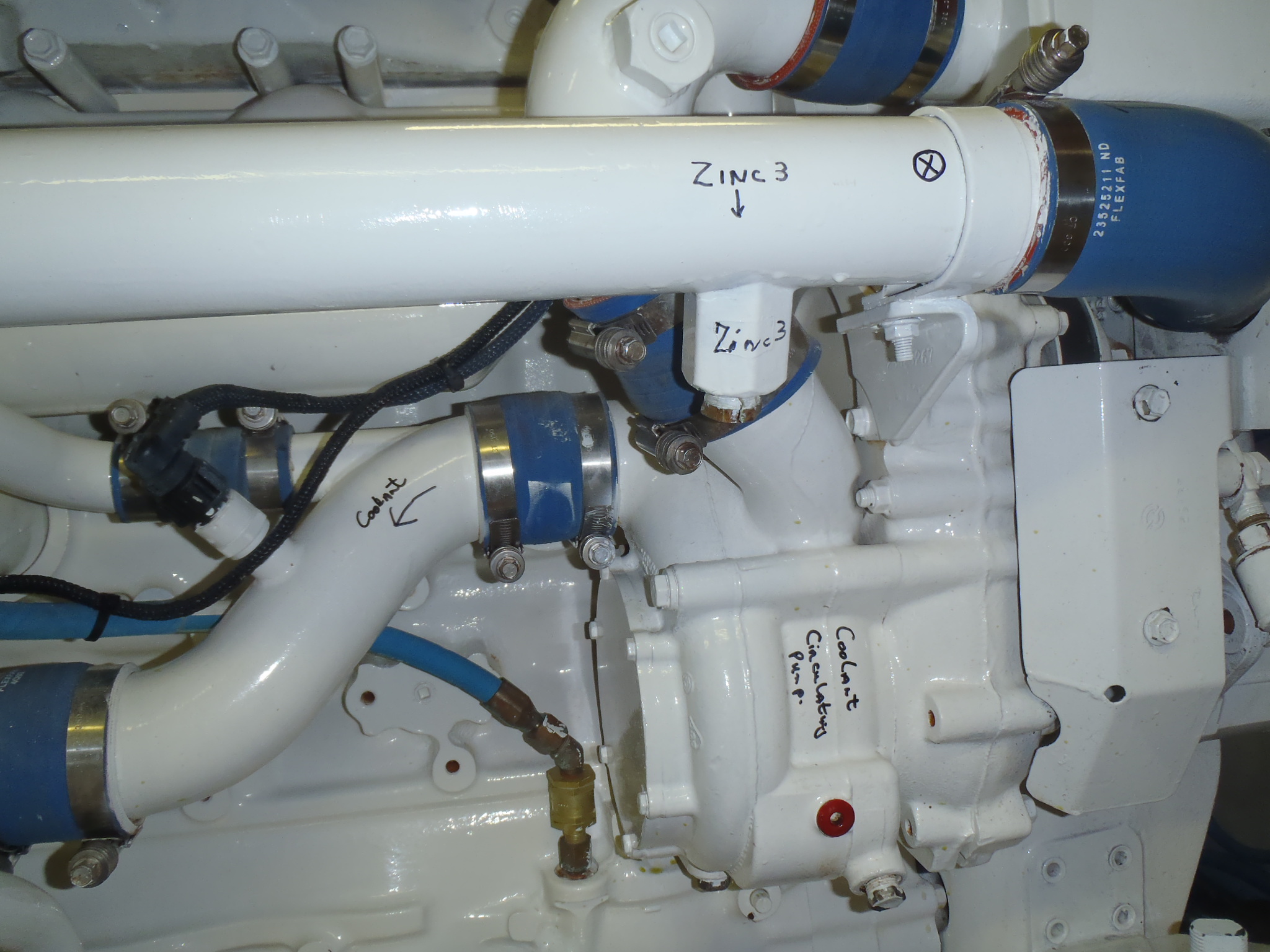
The world renowned Bob Senter, known among Nordhavn owners as “Lugger Bob” because of his incredible expertise with Lugger diesel engines, arrived on June 23rdfor several days of onboard training for John and Bradley. This included hands-on servicing of both Northern Lights generators (which have Lugger engines) plus both Detroit Diesel main engines (which he recently became an expert on), explanation of various parts and engine workings, labeling of critical parts, and development of our on-going engine room checklist. Bob is also joining us for our cruise south to Florida and we feel fortunate to have his expertise coupled with a great personality.

Bob oversees Bradley and John in the engine room
On June 24th, fellow Nordhavn owners Mike and Maria from Liberty Call and Ron from Alcyone joined us for a dinner meeting of the Bob Senter Fan Club, a great night for getting to know each other, share Nordhavn stories, fill Bob with good food and drink, and pick his brains!
On Sunday (June 25th) I made a final trip to Costco to provision for the next two weeks and our friends Lloyd and Arlene visited the boat and kindly drove my car back to our house. Unfortunately the photo-journalist was on strike so there are no photos of Lloyd and Arelene on board – guess that means they have to come back! After some fabulous crabcakes and lousy service at Stoney’s, we woke the next morning to begin preparations for our departure from Maryland.
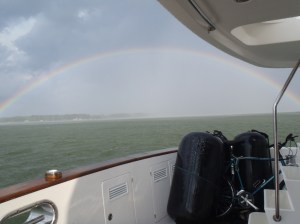
Rainbow at Reedville (Chesapeake Bay)
There was a lot to do and we were quite busy. We had Neil, a local diver, clean the bottom of the boat, which was covered with growth and barnacles after mostly sitting for six months. Bradley, John, and Bob were busy with tasks in the engine room, filling fresh water tanks, storing gear, and more, while I stored all the provision and readied the interior. During the process, Bradley’s bicycle, which was sitting on the dock, decided to go for a swim, necessitating a bike rescue operation. Bradley donned his snorkel and weight belt, located the bike on the bottom in 12 ft of water, tied a line around it and John hoisted it back up. Bad bike!
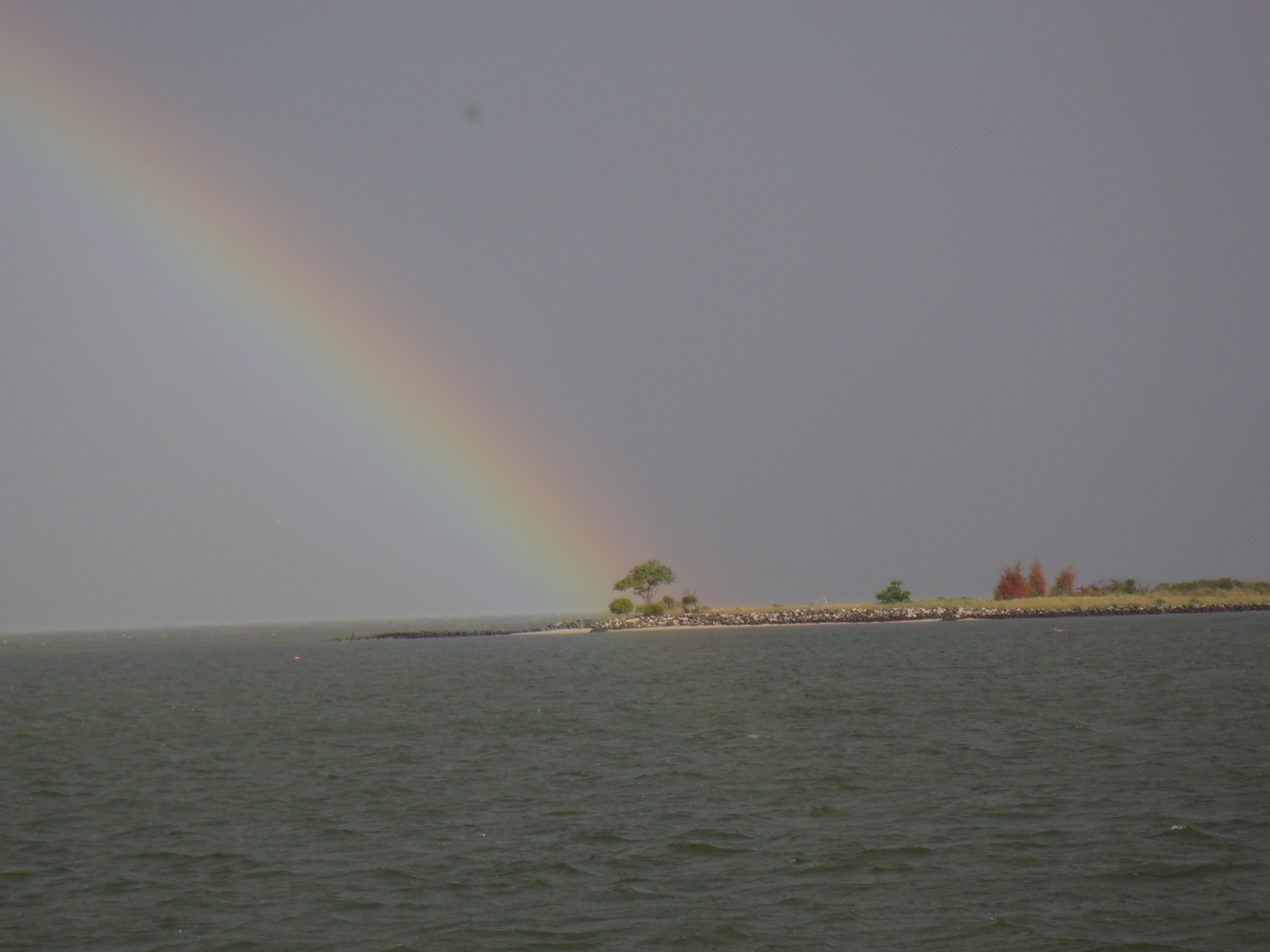
On Tuesday we were ready to depart. Our first stop Reedville, about 40 miles away. This will give us a chance to test everything, get our sea legs, then anchor for the evening in a peaceful spot. Our trip was very smooth – minimal winds and calm seas. Our anchorage was quiet and peaceful, great for a swim, though there were plenty of jellyfish about. After swims and showers, we were treated to a free boat wash, courtesy of a nice thunderstorm that left a breathtaking rainbow in its wake. It looked as if the rainbow was actually touching the water! We felt just like the pot of gold at the end of it. A great way to start the trip!

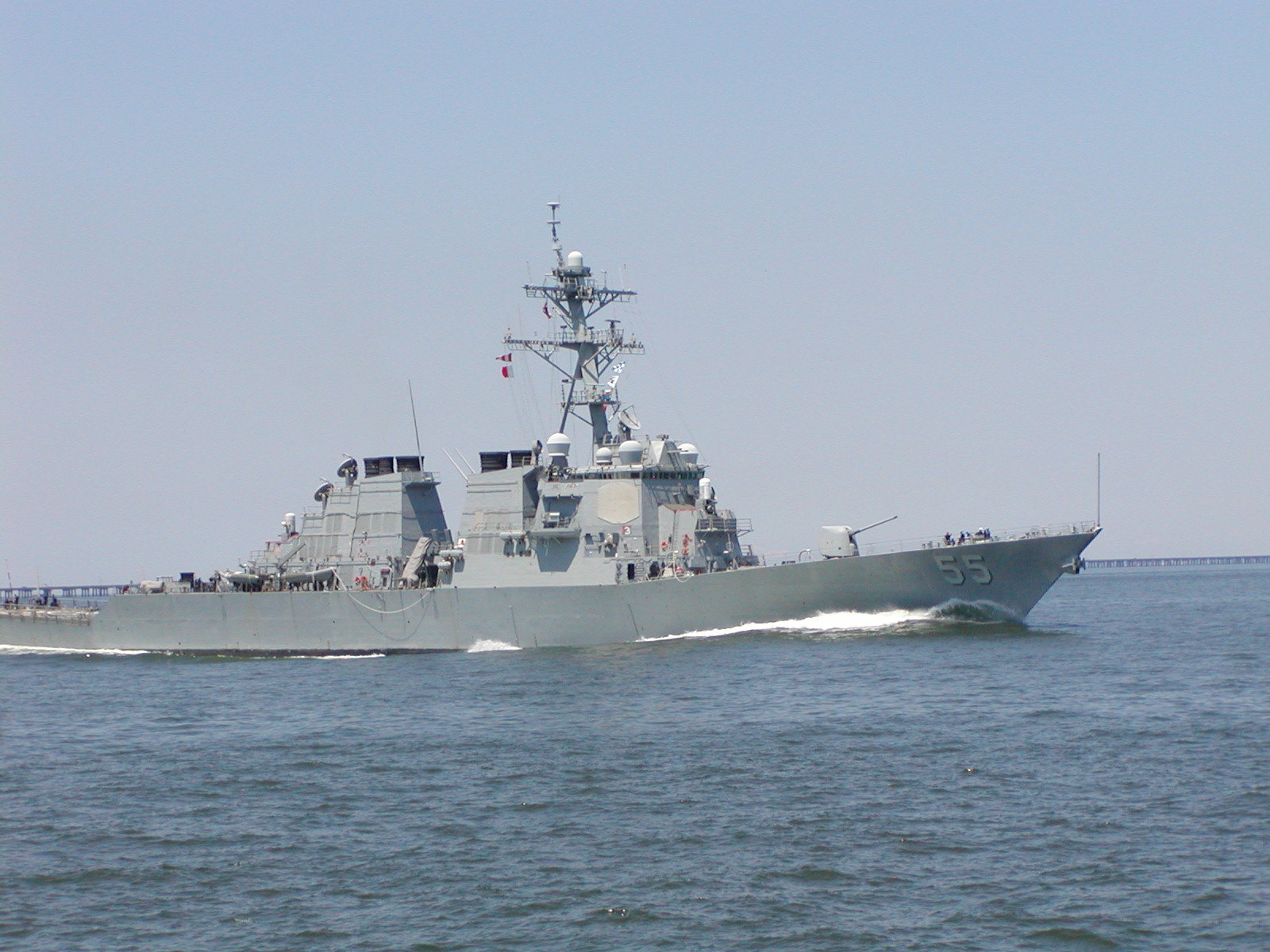
Bob, Bradley, and Kathy with Warship 55 passing
The next morning we departed for the Poquoson River, just south of the York River and very close to the mouth of the Chesapeake Bay where we anchored for the night. We had internet connection and shortly after anchoring we received an email from Bob and Becky, who lived in the house right behind where our stern was pointing. They saw our name on the stern, found our website, sent us an email, then came by to say hello in their Boston Whaler, bringing us some fresh cucumbers from their garden (which later made a great cucumber salad)! We were also visited by a friendly, but questionably sober fisherman who came by for a chat and several small boats that drove by for a closer look. We had a nice swim, showers, taco dinner, beautiful sunset, and good weather forecast for departure south in the morning.
On Thursday we departed the Bay for the Atlantic Ocean with our next destination Charleston, SC, a trip of about 440 miles which will take us about 54 hours. To get to the ocean, we pass over the tunnel portion of the Chesapeake Bay Bridge Tunnel near Virginia Beach. As we were approaching the tunnel, US Warship 55 was behind us, moving much faster and closing rapidly (note that Warships don’t identify what type of ship they are, nor do they show up on AIS – the vessel identification system). So it was just Warship 55. A tug pushing a large barge was coming the other direction and it looked like they would pass right around the tunnel crossing. The tug contacted the warship to request that it reduce speed so as not to cause excessive wake. Then the Warship called us to ensure we were willing to move over to let him pass, as even at reduced speed he was much faster than us. We agreed and expressed our thanks for all they do for “our country”, then realizing we fly a Cayman Islands flag as that is where our boat is registered. The Warship radioman then said he noted our name Shear Madness and wanted to make sure we weren’t planning to do anything crazy. We all had a good chuckled and posed for some photos as the Warship passed us.

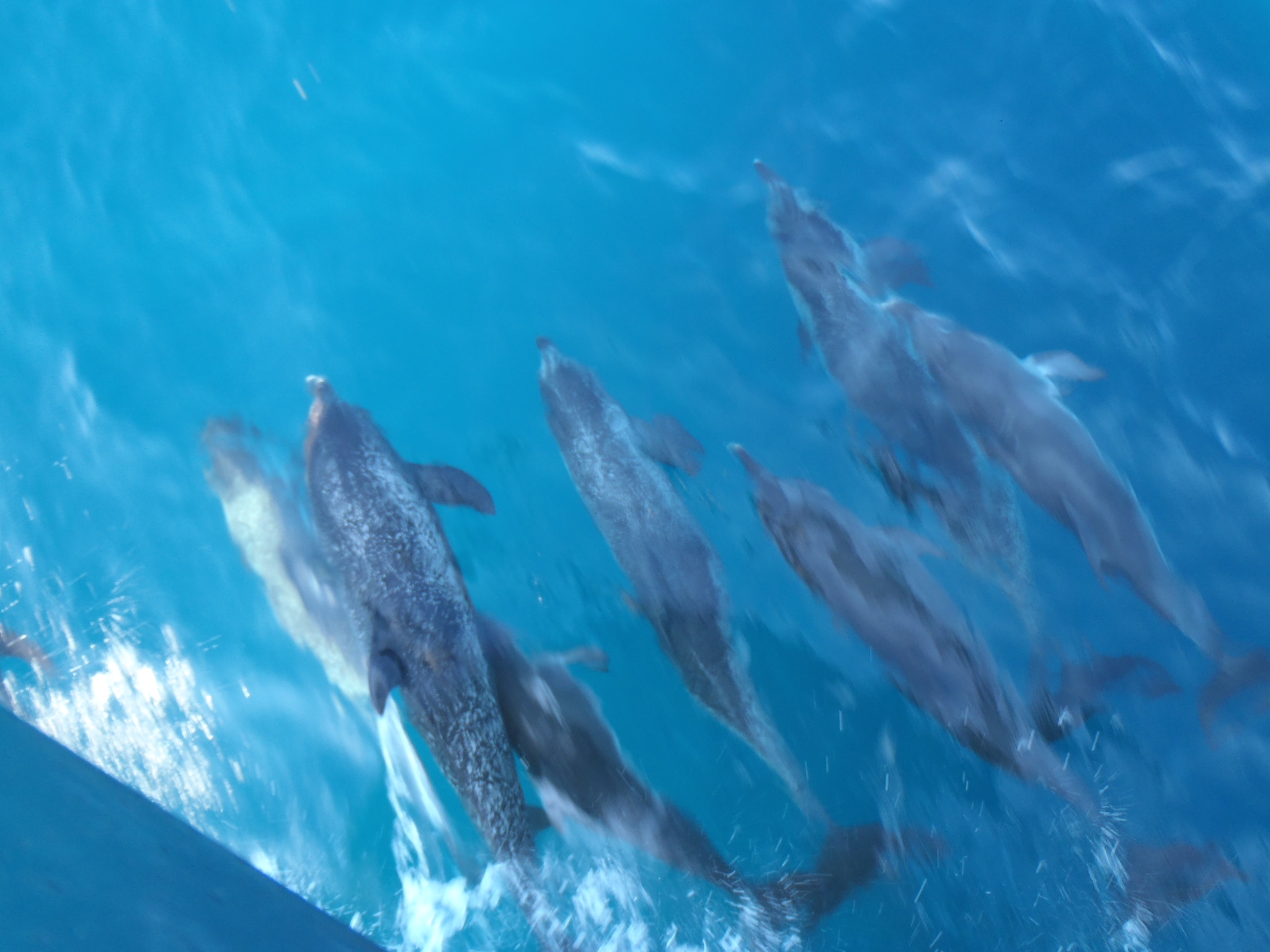
Dolphins on the Bow off North Carolina coast
One of the things we are now doing is to run the engines at max capacity for ten minutes every 24 hours or at the end of every trip. While this burns a lot of fuel, it is good for the engines. We’re also doing some testing on running a single engine at a time – this results in an increased load on the engines (which they like), with some fuel savings, but at a cost of speed. However, running on a single engine at reduced speed gives us increased range.
Now we are in the ocean, just past Cape Hatteras as I write this. We have no internet connection, so I can’t post this until we do, but seas remain calm and we are enjoying the passage. We are about a third of the way to Charleston. I was just summoned to come to the bow to watch an incredible dolphin show! We had dozens of dolphins playing on the bow for quite some time.






Bradley is a Yachtmaster and lots of other news (June 2011)
Posted by Kathy Clark in Trips on June 22, 2011
June 22, 2011
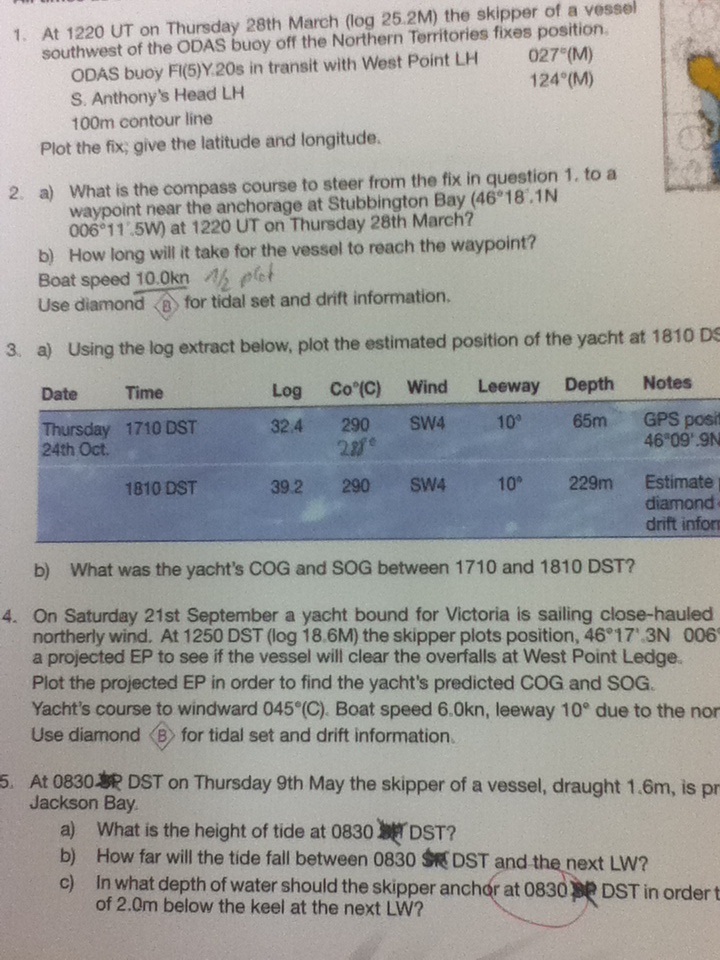
Bradley completed his training and passed his exam for the RYA (Royal Yachting Association) Yachtmaster 200 Ton Offshore license. As he will tell you, his test was MUCH harder than mine. It was a longer course, lasting three weeks and encompassing both classroom instruction and a written test, plus on-boat instruction and a practical on-the-water exam. One example – while in a channel with several large ships around, the examiner threw the “man overboard” dummy into the water and Bradley had to execute the rescue procedure. He of course did this flawlessly. There was plenty to learn in a short time, but he passed with flying colors and we are now both certified – he with a British license and me with a US Coast Guard one. We’re both ready to be done with school and start the cruising life!

Bradley and classmates at during Yachtmaster training
While I was back at the boat and Bradley was still in Florida, my friends Jamal, brother Jaylen, mom Dannielle, and grandmother Caroline came for a visit. We had a lovely time sitting on the flybridge and talking about upcoming cruising adventures and when they will come join us for some sea time! Jamal and Jaylen would make great deck hands, if we could just pry them away from their interest in horses (Jamal) and football (Jaylen) and Dannie and Caroline would be a real pleasure to have aboard.
Our good friend Neil, who is Australian but we met in New Zealand but who now lives in London, was in town with his significant other Suzy for a visit with Suzy’s friends. Neil came for a visit on Shear Madness and helped me to bring aboard our cow (vegetarians may want to skip to the next paragraph). A while back Bradley and I had bought a “Beef for a Year” package at a charity auction. It was advertised as 300 pounds of beef, equating to half a cow. However, it turned out to be an entire cow, donated by a beef farm. That’s a lot of meat! But fortunately we have plenty of freezer space on board, so we brought half the cow to the boat and the other half to our house in Virginia. We’ll be eating lots of steaks and burgers in the months to come! One more reason for you to plan a visit!

Jaylen, Jamal, Dannielle, and Caroline visit Shear Madness
One half of our cruising partner couple arrived from New Zealand this past weekend – John Lovatt who has successfully executed his long term leave from the NZ Air Force. Our crew is now 3/4 complete and John’s wife Leanne is set to join us on August 11. Since John has arrived, we’ve been busy preparing the boat for departure from Solomon’s Island. This week, we had to have an evaporator on our Sub-Zero refrigerator replaced. We were a little concerned since the refrigerator is not movable, but Donnie the tech did a great job and the fridge is back in service. We’ve also diagnosed a problem with our inverters (power units) and ordered the part required to fix it, hopefully for arrival before we depart from here!
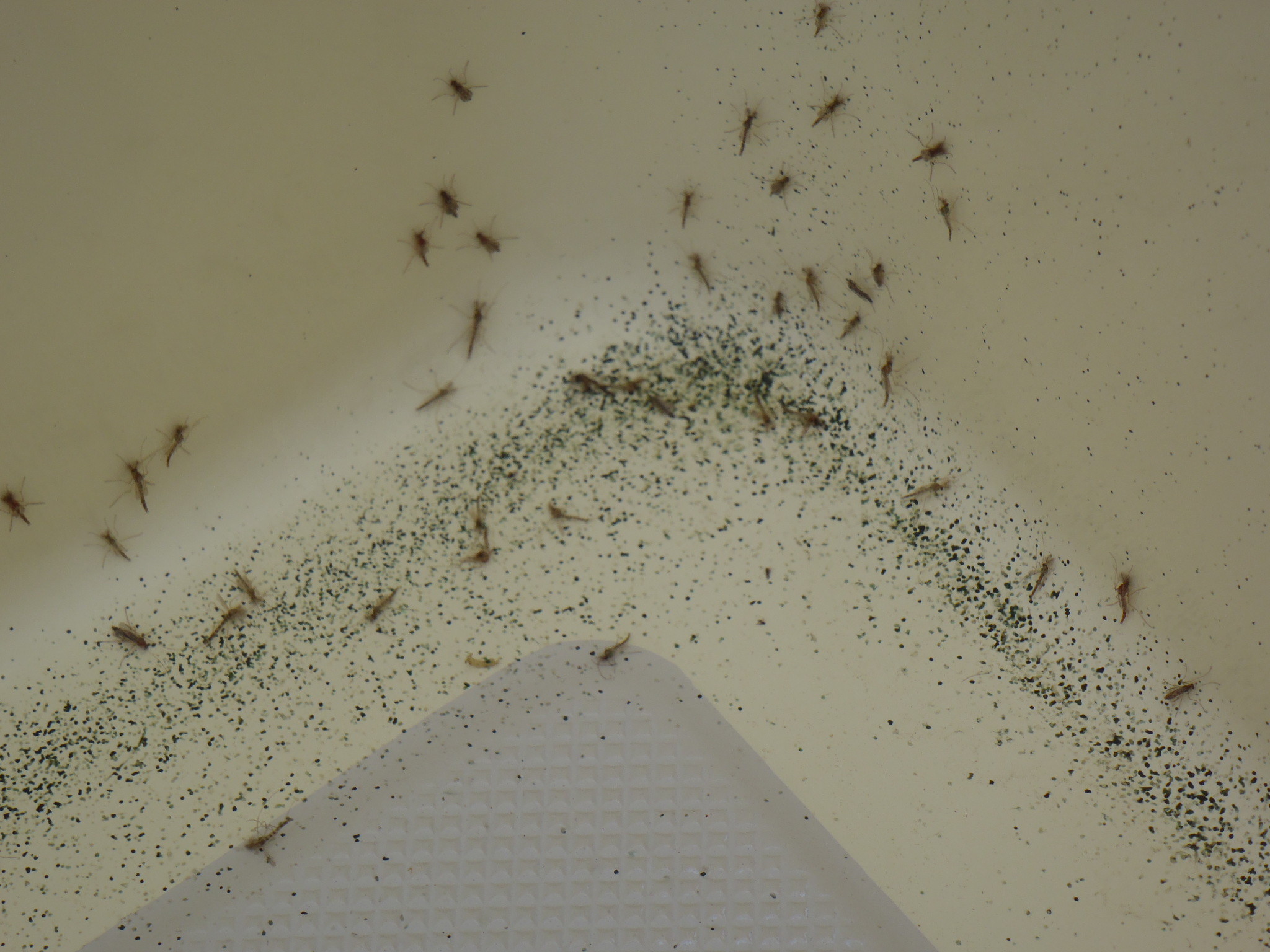
The biggest problem we’ve been facing is the dreaded Mayfly. A small little bug, it has become our most hated creature. There are thousands, maybe millions of them all over our boat where they leave an awful green residue, then die and bake on. For the past two days, Bradley, John, and I, along with our friend Susan, have been cleaning the boat. Yesterday we got half of it done – in addition to the Mayflies there was plenty of dirt – but today everywhere we had cleaned had been Mayflied again! Funny thing – as we’ve been trying to move more of our stuff aboard, we keep joking about needing a bigger boat. But as we are cleaning it, we are wishing for one just a wee bit smaller! It really is a lot to clean! But we’re confident that when we are all aboard all the time we’ll be able to stay ahead of the game! It seems nobody told the Mayflies that it’s now June!
Tomorrow we await the arrival of Bob, a generator/diesel specialist who will be onboard for several days of training, and then will join us on our journey south to Palm Beach, Florida where we will be doing an upgrade of our electronics systems, computers, and entertainment system.



Getting some training (June 2011)
Posted by Kathy Clark in Trips on June 9, 2011
June 9, 2011
For the past two weeks Bradley and I have been studying at the Maritime Professional Institute in Ft. Lauderdale. I was working on my US Coast Guard 100 Ton Masters (Captain’s) license while Bradley is getting the Royal Yachting Association (RYA) 200 Ton Offshore Yachtmaster certification (he has two more weeks to go). Both these certifications are intended to demonstrate a certain level of mastery and are recognized as maritime credentials, very similar in concept (though perhaps not as tough) to a CPA or Bar exam. My exam consisted of four sections – 1) Rules of the Road; 2) Deck General and Deck Safety; 3) Navigation and Weather General; and 4) Chart Plotting.
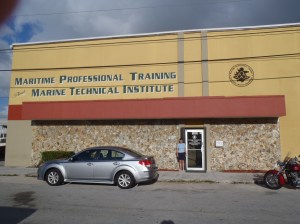
My Latest Alma Mater - Maritime Professional Institute
My class ran from 7:30am to 4pm each day for two weeks. There was a lot to learn and it was clear the class was solely a “test prep” deal. We were even told “we’re not here to teach you how to be a good Captain, we’re here to make sure you pass the test”. Having spent the past two years of my professional life in Education, this was a little disconcerting. We were not allowed to ask questions outside of specific topics that were included on the exam. We were taught techniques to help us pass the test such as “when in doubt, Charlie out”, meaning that if you have no idea what the answer is on a multiple choice test, pick “C” because that is the most common answer. Also, if ALL of The Above is included as an option, 90% of the time it will be the right answer. However, despite the “teach to the test” objective, over the course of the two weeks, we learned a lot and developed a good foundation.
In addition to the regular class, I also had several additional evening classes. A requirement for the Coast Guard license is a current First Aid/CPR certification, so that took up two nights the first week. In addition, a Captain is required to have a radio license issued by the FCC, which requires another night of class. Because I have so much time on a sailboat, I am also eligible to have a “Sail endorsement” attached to my license, which requires yet another class and test. So it was many long days but I obtained all the required certificates. I also had to pass a physical exam, which consisted of filling out a 9-page questionnaire, having a nurse take my blood pressure and asking “How tall are you and how much do you weigh?”, then recording the answers with no verification – not the most rigorous standard! I did have to have an interview with the doctor, which lasted at least 30 seconds. And I did have to pass a drug test.
My 100-Ton Certificate
The next step was filling out the Coast Guard application, including documentation of at least 720 days at sea which at least 360 days “offshore” (outside the boundaries of inland waterways). That is now complete and my application is in the hands of the Coast Guard.
So assuming the Coast Guard approves, I will soon be authorized to take up to six passengers out for hire on a vessel up to 100 gross tons, provide towing services to disabled boats and charge money, or work on a large ship (such as an oil tanker) as a wiper (wiping up oil in the engine room) or as a food handler. I don’t really intend to do any of those things, but our insurance company is happy and now believes I am qualified to operate our own boat! All in all, it was a good experience and I will soon be an official Merchant Mariner.
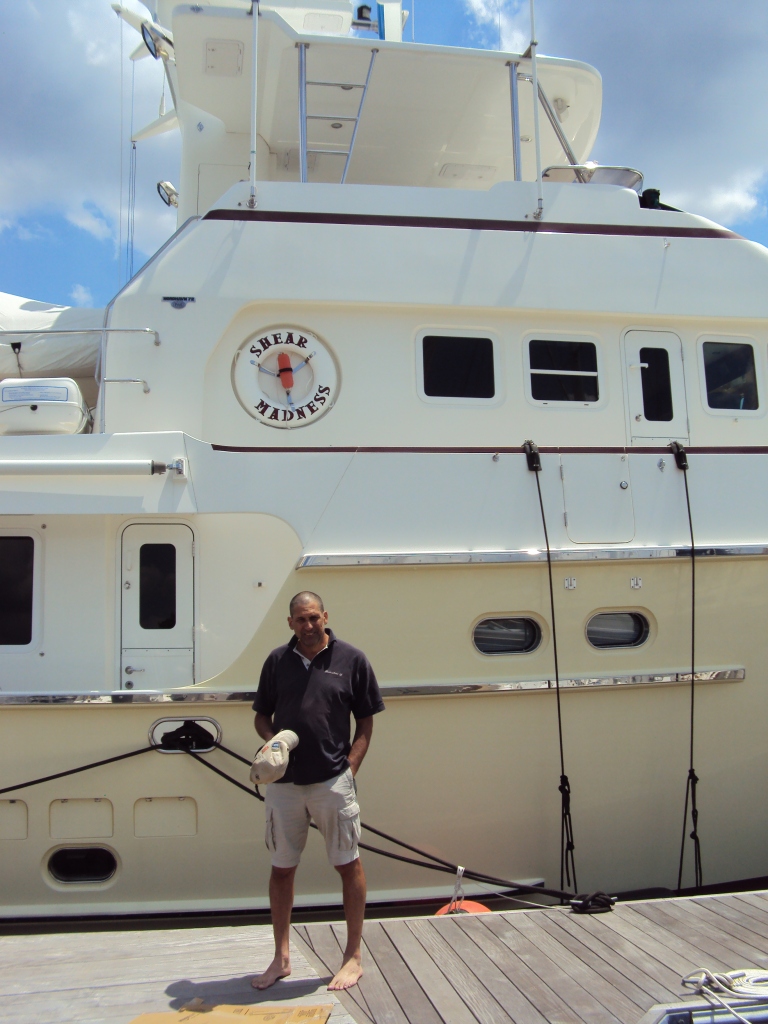
 Shear Madness